Written Treasures – Spoken Gems

Looking Back on Our International Conference in Mainz, 17–20 June 2024

Katharina Wendl & Annett Martini

When we launched the organization of this conference with a call for papers last October, we were overwhelmed by the large number, high quality and, above all, the incredible thematic breadth of abstracts. It was virtually impossible for us to select only a limited number of speakers based on this rich pool of submissions. This is why we decided to turn our idea of holding one conference into two: an in-person event in Mainz and a virtual conference slated for September. At this point, we would again like to express our gratitude to all the researchers from Algeria, Azerbaijan, Brazil, Canada, Egypt, European countries, Ghana, India, Iran, Israel, Turkey, the USA and Vietnam who are involved in making these two conferences possible. Thanks to all of them, we were able to put together two incredibly rich and diverse programs.
Fast forward to four days in June 2024, which were devoted to questions about how a book, a scroll, a woodblock or an icon can become a sacred object for a particular community and how sacredness is connected to the material used for manufacturing them. What rituals are associated with these extraordinary artefacts during their production and handling? What stories are told about them and their manufacturers? What place do the materials, the script or the layout occupy in the cultural memory of religious communities or within secularized societies?

Scholars presented research on what makes books, icons, woodcuts, inscriptions, banners and sutras sacred artefacts. Some asked how narratives, rules and customs surrounding writing tools and materials have evolved. What emerged from the panels and discussions is that all these sacred objects under investigation are somehow connected to script and text respectively.
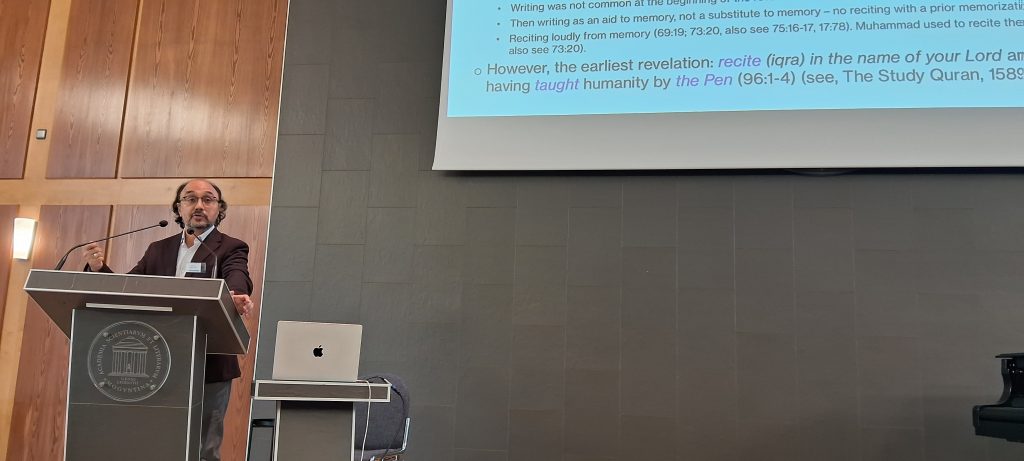
BUI THI THANH MAI (Hanoi) presented her research on ancient sacred woodblock art and how Buddhist monks of the Truc Lam-Yen Tu tradition have approached them in the light of technological advances. MOHAMMAD HOSAIN FOROUGHI (Teheran) traced the history of the Negel Qur’an, which is revered by the people of the Iranian village of Negel and beyond as a special manuscript granting blessings and security. His presentation led to discussions about the veneration of religious books, which was picked up again after presentations by CLEMENA ANTONOVA (Vienna), CORNELIA SOLDAT (Cologne) and MIGUEL GALLÉS MAGRI (Barcelona) who talked about the making, sanctification and changing purpose and meaning of icons in Orthodox Christian traditions across different centuries.
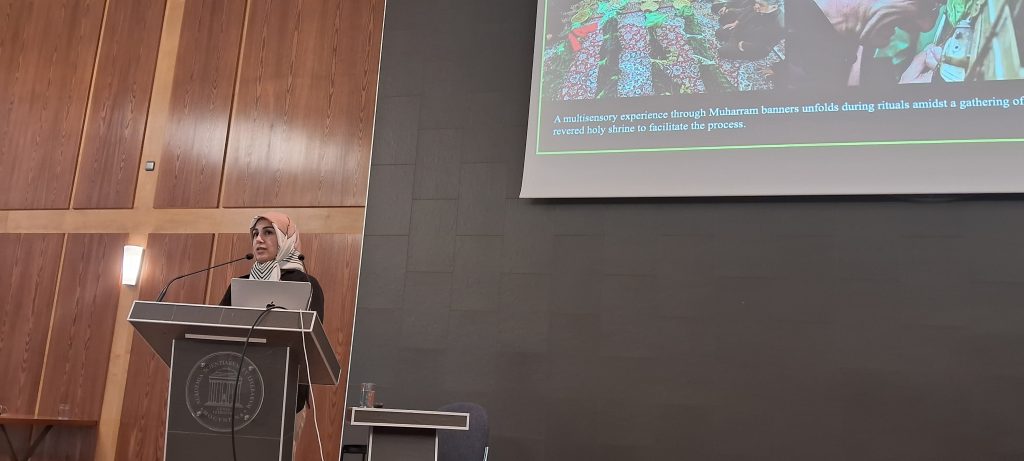
UTA LAUER (Hamburg) and RAJENDRA SINGH THAKUR (New Delhi) shared their research about Buddhist sacred literature and changing attitudes to its literary and architectural heritage. Papers on medieval English poetry as an embodiment of Christ (NATALIE JONES, London) and the highly decorative chessboard-plenarium of Otto the Mild (KRISZTINA ILKO, Cambridge), Shia Muharram banners as expressions of mourning or protest (ZEINAB VESSAL, Berkeley), and hidden numerological meanings in Ottoman culture (MUSTAFA ÖZAGAC, Istanbul) and the Sufist Hurufi sect (SLOBODAN ILIC, Nicosia) contributed to a nuanced and insightful discussion of sacredness in religious texts beyond genres that are commonly considered sacred.
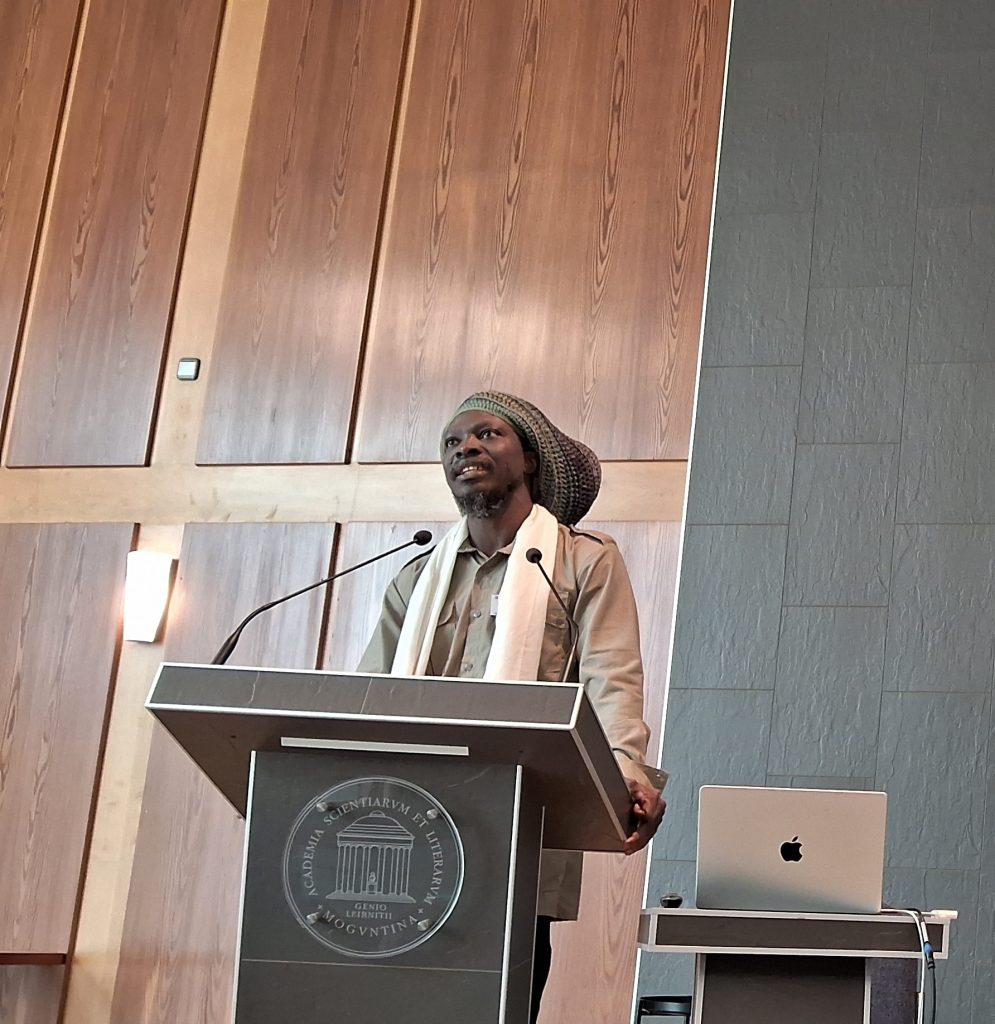
Holiness, however, is not only found in the written word but also in performance, liturgy and the traditions that develop around religious texts. In an insightful presentation on Zoroastrian manuscript culture, SHERVIN FARRIDNEJAD (Hamburg) showed that holiness in Zoroastrianism is not created by the act of writing, but by reciting religious texts from memory. Orality in relation to the Qur’an was the main theme of SAYED HASSAN AKHLAQ’S (Baltimore) contribution to the conference. The importance of the spoken word was also highlighted in JONATHAN ELUKIN’S (Hartford) paper on medieval oath-taking. BOSCO BANGURA (Leuven) and DE-VALERA NYM BOTCHWAY (Cape Coast) explained how Pentecostal Christians and Muslims in Ghana relate to scripture as an embodiment of holiness to be consumed by the believer (metaphorically or literally) to become one with the spiritual messages of the Bible or the Quran.
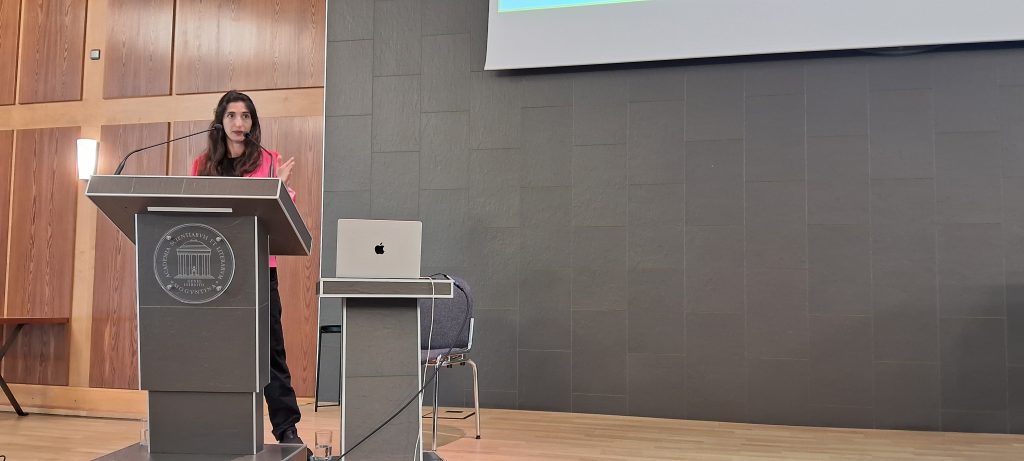
While most contributors were concerned with the richness of one religious tradition and its notions of scripture and ritual writing traditions, some also presented the results of their comparative studies. For example, HANNA TERVANOTKO (Toronto) discussed the divinatory use of scripture in the ancient Jewish and Christian traditions. HEYDAR DAVOUDI (Evanston) analysed the image of the Ark of the Covenant in Jewish and Muslim traditions. The sacred materiality of scripture is not exclusive to the scriptures themselves. In many religious traditions, their production as well as their makers must meet certain criteria and comply with various religious rules. HUSSIEN SOLIMAN (Alexandria/Cairo) and WALID GHALI (London) explored the traditions and instructions that Quranic scribes must follow and their required character traits, sparking insightful discussions that compared Islamic ritual writing rules with Jewish scribal traditions. JOANNA HOMRIGHAUSEN (Durham, NC) added perspectives on the reed, a central writing tool in Jewish scribal tradition, to this conversation. FARNAZ MASOUMZADEH (Isfahan) presented her research on the sacred letterforms in early Islamic Quranic manuscripts, highlighting the hidden meanings of individual strokes and lines in Quranic manuscripts. THOMAS RAINER (Zurich) traced the use and depiction of purple script in Christian art and biblical manuscripts. But once words deemed sacred have been written down, consecrated and used, what happens when, after many years, these sacred texts are worn out and cannot be repaired anymore? LEOR JACOBI (Ramat Gan) and NETTA SCHRAMM (Beer Sheva) discussed religious laws, customs and sensitivities regarding the disposal of Jewish ritual texts and sound recordings. While Leor Jacobi focused on medieval Spanish Jewish culture, Netta Schramm explored contemporary discussions and dilemmas facing laypeople and rabbis in dealing with Jewish texts and recordings that are in their possession and that they wish to dispose of.

The breadth and depth of the presentations were fascinating, enlightening and eye-opening. Despite the different religious traditions, time periods, media and cultures studied by each contributor, the conversations and insights gained from this interdisciplinary gathering of scholars from so many religions and cultures were, indeed, fruitful. They allowed participants to see their research in the wider context of religion, art history, intellectual history and cultural studies.
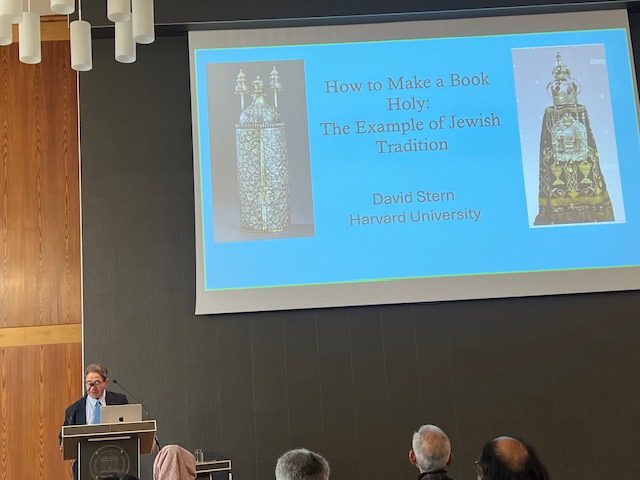
While the research project „Materialised Holiness“ focuses exclusively on Jewish notions of scribal culture, Jewish scribal traditions, and Torah scrolls, it is no surprise that such an interdisciplinary conference has been part of the project’s plans from the beginning. Torah scrolls are unique and defining to Judaism in their production, use, lore, and history, as emphasised by Prof. DAVID STERN (Cambridge, Mass.) in his keynote address „How to Make a Book Holy: The Case of the Jewish Tradition.”

However, Jewish scribal rules and narratives about writing in Jewish tradition did not develop in a vacuum. Rather, they were shaped inter alia by technological and economic developments. Moreover, they were influenced by the cultures in which the Jewish diaspora lived. The values, norms, traditions and beliefs of mainstream Christian or Muslim societies impacted Jewish traditions, too. Thus, despite all the theological and cultural differences, the meaning attributed to the act of writing and veneration of Jewish sacred texts have parallels in different religious traditions. Many rules and traditions about the painstaking manufacture, careful usage, respectful handling and dignified disposal of Torah scrolls can be linked, paralleled, and contrasted with those of other religious traditions. Therefore, comparatively studying Torah scrolls and other sacred writings can stimulate not only dialogue and mutual understanding but also new insights. It is precisely the interweaving of different cultures, the interdependence of Christian, Muslim, Jewish, Buddhist and other ritual professionals as well as lay people, that creates the rich, multifaceted practical, mystical, exegetical and philosophical traditions that imbue texts not only with religious meaning but with holiness.
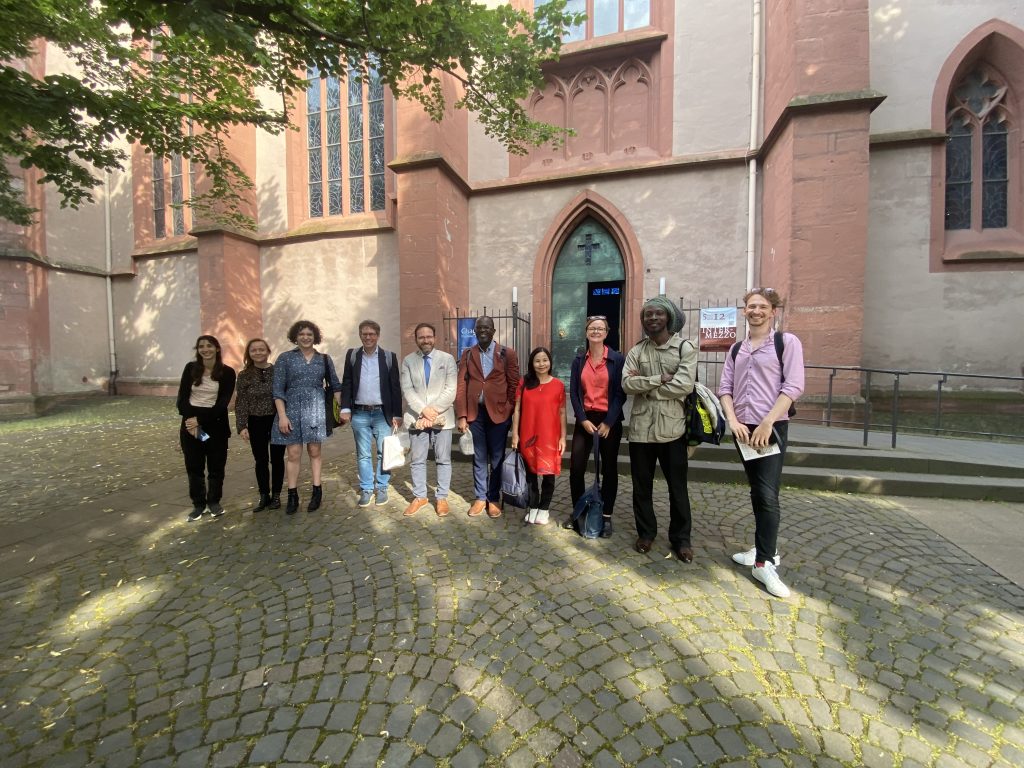
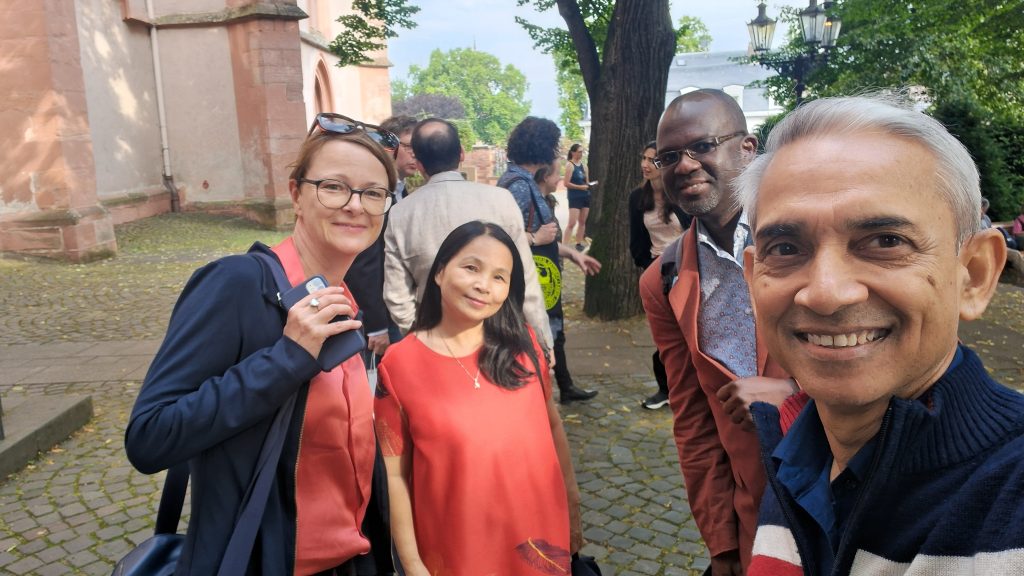
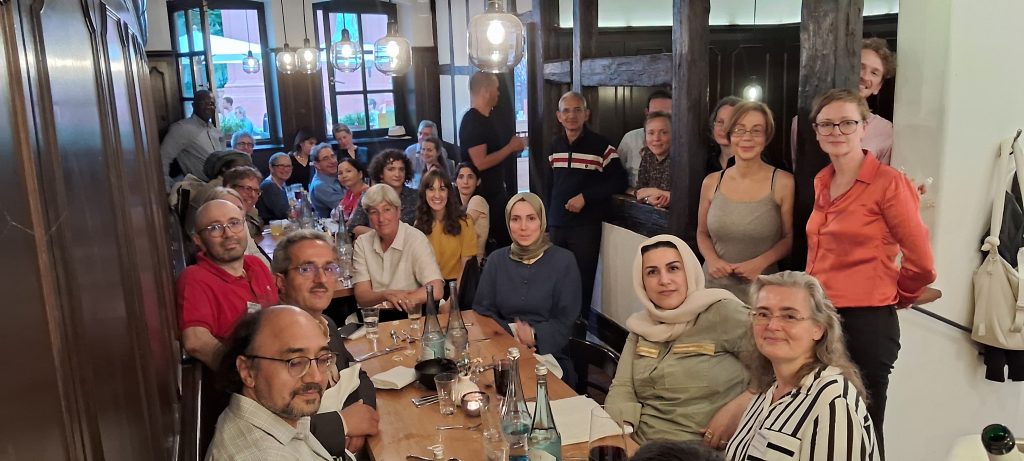
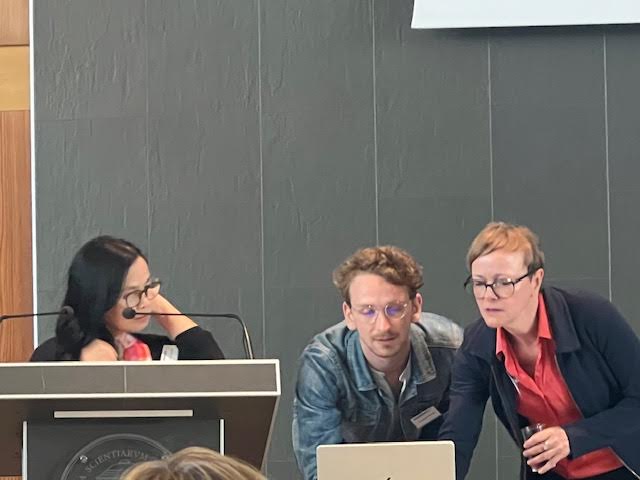
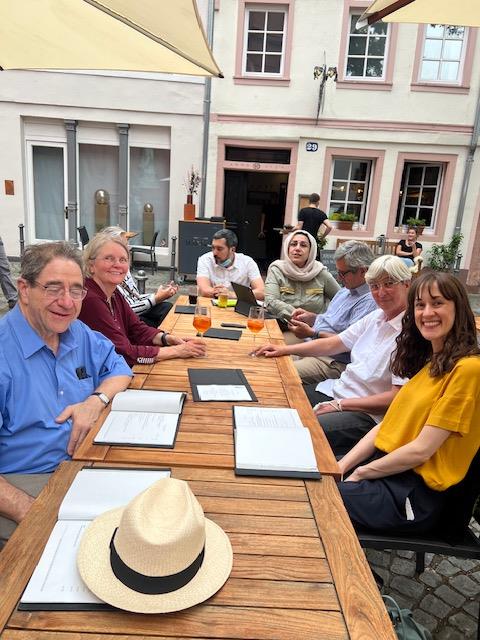
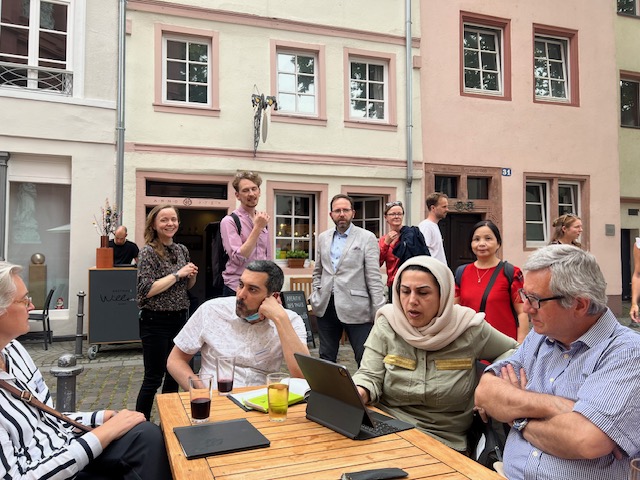
The diverse and multifaceted research findings that were presented in the auditorium of the Mainz Academy of Sciences and Literature were discussed not only in the panel sessions but also during breaks, dinners and walks through the city of Mainz, for example on the way to a guided tour of the church of St. Stephan, which is adorned with glass murals designed by the artist Marc Chagall. It emerged that an interdisciplinary investigation into sacredness and religious objects, most formerly books, offers many new avenues for research, exchange and dialogue and should be the subject of future research activities.
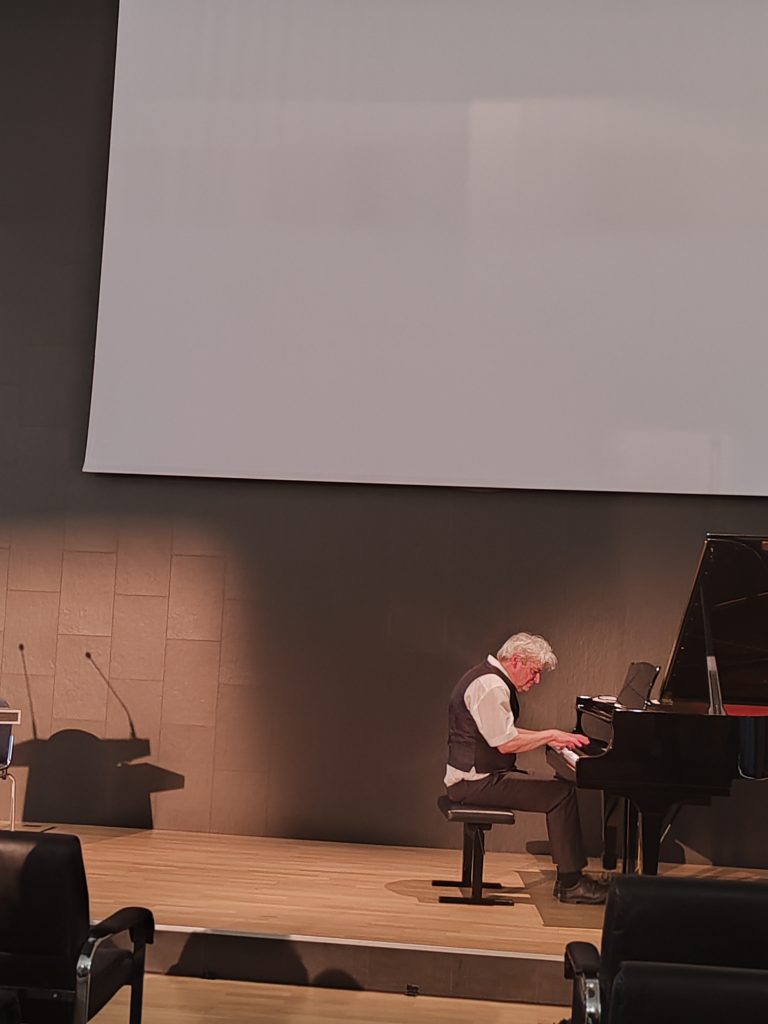
On Wednesday evening, pianist THOMAS BÄCHLI (Berlin) added music to the conference’s diverse repertoire with a performance of Johann Sebastian Bach and John Cage. The conference was such a warm, productive, and stimulating occasion that will certainly stay with us for a long time.
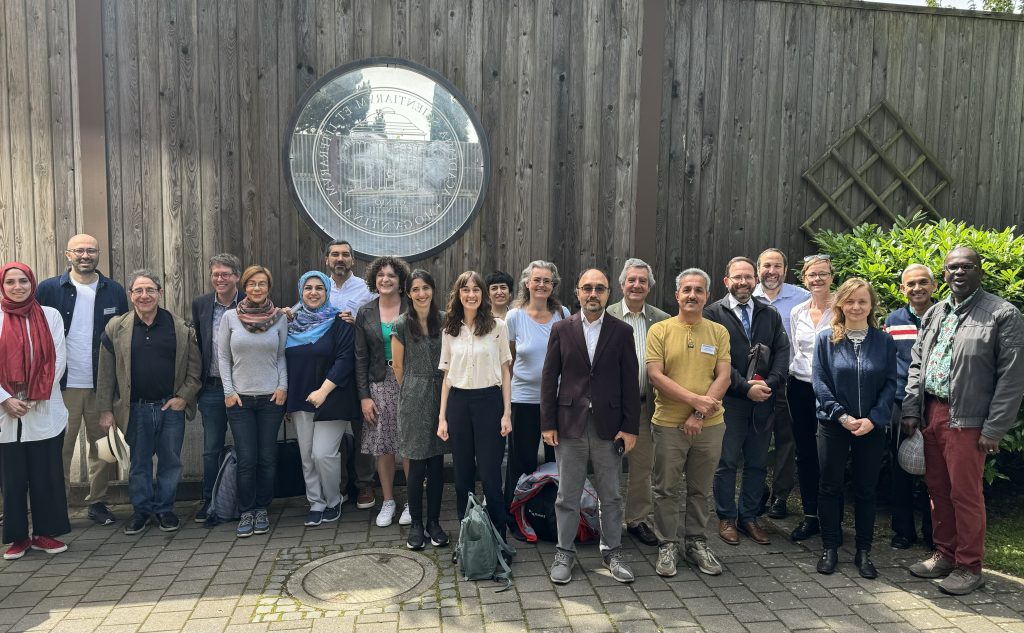
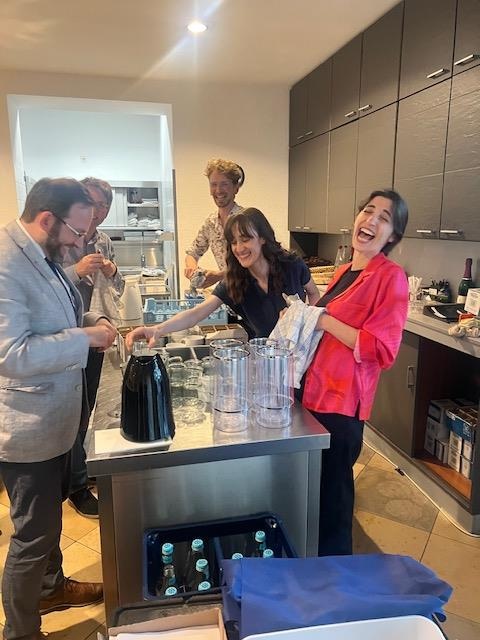
After four days of constructive dialogue, it was time to say goodbye and express thanks: To the Academy of Sciences and Literature in Mainz for hosting the conference, to the team at Freie Universität, both those who came to Mainz and those who worked in the background to make this conference possible and above all to the contributors, participants and moderators of this conference.

Some participants did not have to travel far to get to Mainz. Many others, though, had to travel across half of the globe to join us at the Academy of Sciences and Literature. In the months leading up to the conference, several scholars, in addition to preparing their papers, had to submit visa applications, attend appointments at German embassies, and hand in a dozen documents to be allowed to attend our conference. Unfortunately, two scholars were prevented from joining us in person due to bureaucratic reasons that restrict academic exchange. We hope to give them a platform for showcasing their important research in our upcoming online conference entitled “Creating More Holiness” (Sept 23-25). Seeing the difficulties that scholars from other parts of the world face in engaging in academic exchange humbled us. It also forced us to reflect on the Western privileges that come with having the ‚right‘ passport, the ‚right‘ country of residence, and being employed by the ‚right‘ academic institution.

It is hoped that the conversations initiated by Creating Holiness will continue and that this meeting in Mainz will generate collaborations, partnerships and new ideas for further research topics and questions. Our first joint project will be the publication of the articles that will grow out of the papers presented at the two conferences. We are already in talks with the publisher Brepols for this matter. Thanks to the enormous cultural diversity represented by the contributions, we hope to sharpen with this volume the phenomenological view of writing as a particular sacred activity. We also expect this collection of papers to challenge our own inherently narrow perspective on the Jewish tradition of writing. Judaism is not an island. Naturally, the diverse cultures in which Jewish diasporas have existed, have made an impact on Jewish book production – and vice versa: The Jewish understanding of what a sefer ha-qodesh should look like influenced the Christian and Muslim spheres of sacred writing. Finally, we would like to express again our thanks to the Academy of Sciences and Literature for hosting us in Mainz for this four-day conference. In addition, we very much want to thank the Federal Ministry of Education and Research for funding this conference so generously.
A footnote from the Gotha Research Library, written with “effort and acuratesse”

Annett Martini

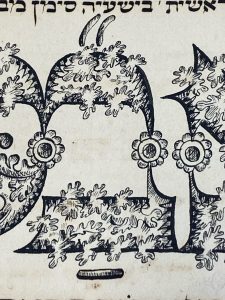
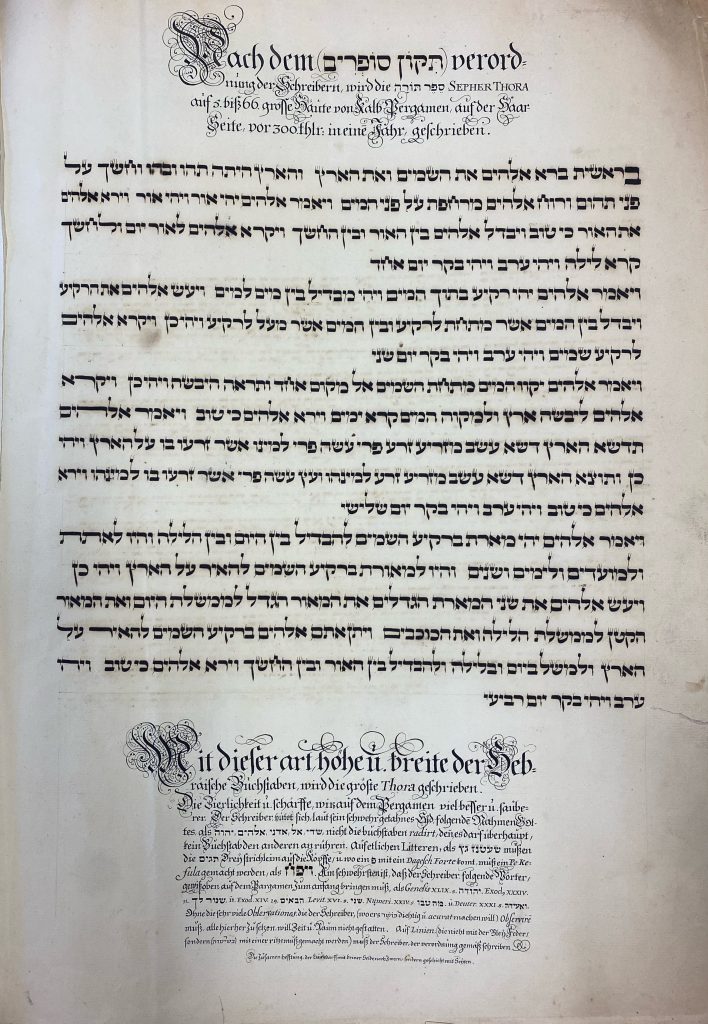
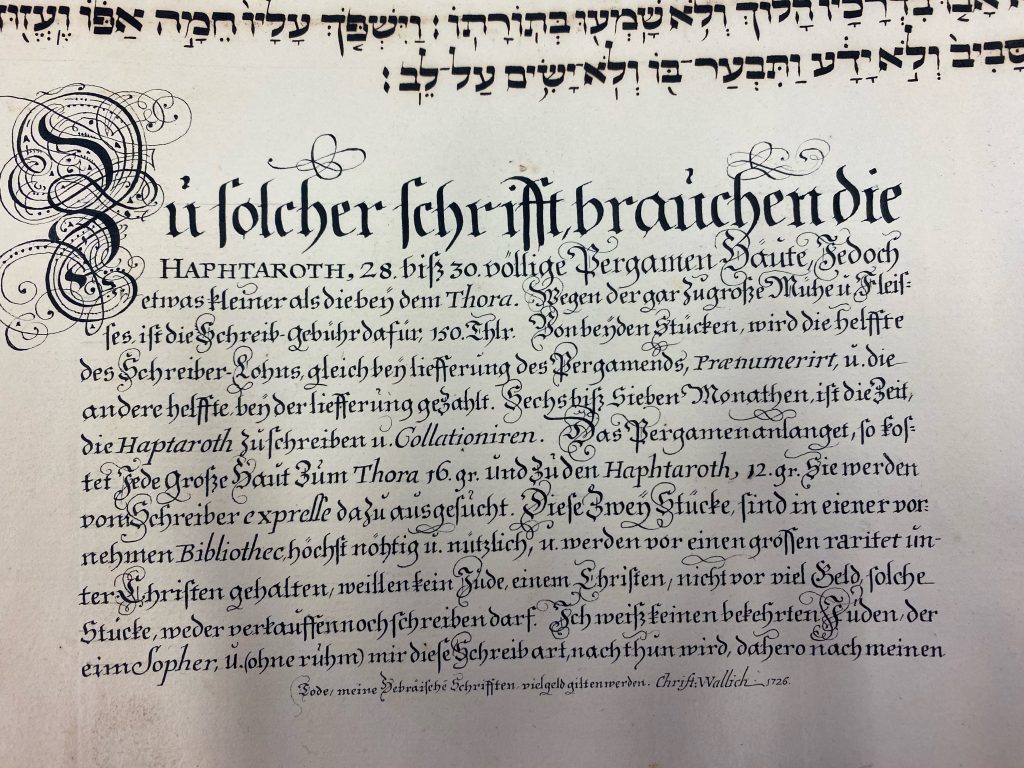
The Gotha Research Library holds a beautifully calligraphed instruction for copying Torah scrolls and haftarot. The writing instruction was recorded in 1726 by the converted Jew Christoph Wallich (1672-1743). On a large sheet of paper 50 cm high and 35 cm wide, the former professional sofer STaM and trained Hazan offers a non-Jewish readership insight into the writing of the texts to be used in the Jewish rite. Both sheets are headed with a few explanatory remarks in German, whereby most of the capital letters of the short introduction are decorated with skillfully crafted, intertwining ornamental patterns. 

Sheet 1 reads:

Nach dem (תיקון סופרים) verordnung der Schreibern wird die ספר תורה Sepher Thora auf z. bis 66 grosse Häute von Kalb Pergamen auf der Haar Seite vor 300 thlr. in einem Jahr geschrieben.

[According to the (תיקון סופרים) decree of the scribes, the ספר תורה Sepher Torah is written on up to 66 large skins of calf parchment on the hair side for 300 thalers, written in a year.]

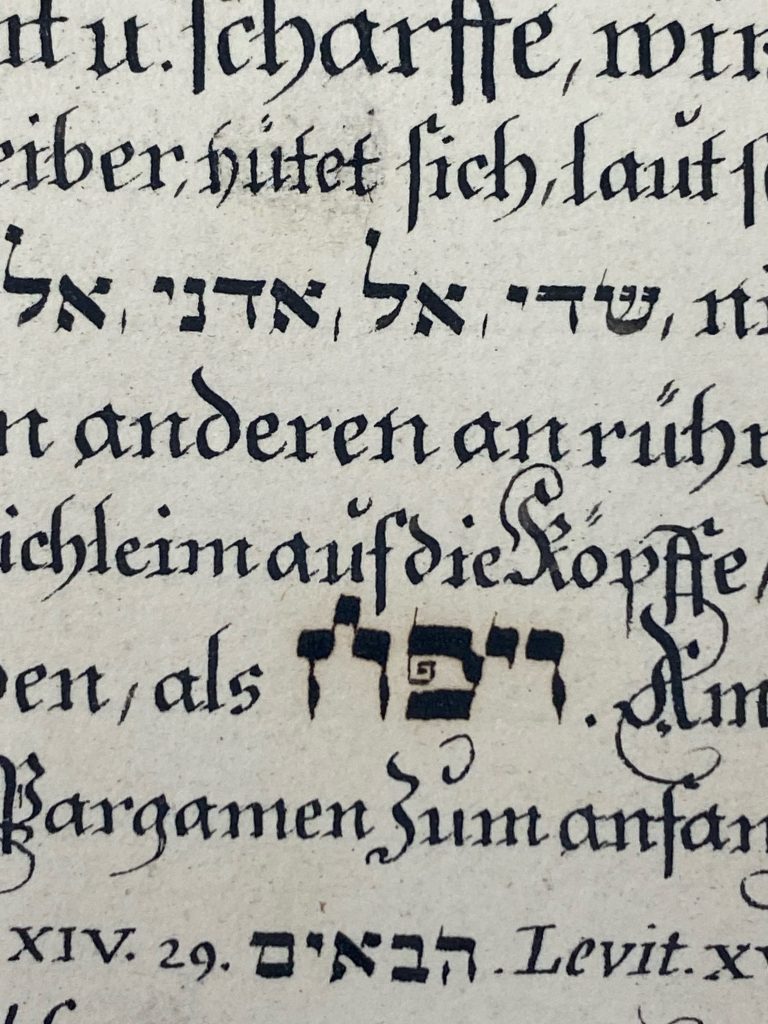
As an illustrative example, the verses Genesis 1:1-19 are cited below, as they were written by Wallich with his characteristic love for detail just beneath the lines previously drawn with a pencil. The Ashkenazic square script is decorated with fine lines running upwards or downwards at the left corners of the letter bodies; in almost all cases, the lamed features two lines extending upwards at the higher end of the neck, and occasionally the lamed also receives a slightly curved hairline at the lower end. Eventually, the seven letters shin, ayin, teth, nun, zayin, gimel and zade are adorned with three small crowns, as already recommended in the Talmud. Wallich sometimes adds an additional stroke to the shin or zade.

Below this impressive writing sample, Wallich provides us with some insight into several of the fundamental requirements of a ritually pure Torah scroll that the scribe ought to know:

Mit dieser art höhe u. breite der Hebräische Buchstaben wird die gröste Thora geschrieben. Die Zierlichkeit u. schärffe wird auf dem Pergamen viel besser u. sauberer. Der Schreiber hütet sich laut sein schwehr getahnes Eyd folgenden Namen Gottes als שדי,אל, אדני, אלהים, יהוה nicht die buchstaben radirt, denn es darf überhaupt kein Buchstab den anderen anrühren. Auf etlichen Litteren als שעטנז גץ müßen die תגים Drei strichleim auf die Köpffe, u. wo ein פ mit ein Dagesch Forte komt, muß ein Pe Kefula gemacht werden als ויפח. Am schwehrsten ist, daß der Schreiber folgende Wörter gewiß oben auf dem Pergamen Zum anfang bringen muß als Genesis XLIX.8 יהודה, Exodus XXXIV.11 שמר לך, it. Exod. XIV.29 הבאים, Levit. XVI.8 שני, Numeri. XXIV.5 מה טבו u. Deuter. XXXI.8.[sic.]ואעידה. Ohne die sehr viele Observationes, die der Schreiber (wo ers כושר dichtig u. acurat machen will) Observiren muß, alle hierher zu setzen, will Zeit und Raum nicht gestatten. Auf Linien (die nicht mit der Bley Feder, sondern (בשיטות) mit einer ritze muß gemacht werden) muß der Schreiber der verordnung gemäß schreiben. Die Zusammenhefftung der Häute darf mit keiner Seide noch Zwern sondern geschieht mit Seyten.

[With this kind of height and width of the Hebrew letters the largest Torah is written. The delicacy and sharpness is much better and cleaner on the parchment. The scribe is careful not to erase the following names of God as שדי, אל, אדני, אלהים, יהוה, according to his own oath, because no letter may touch another. On some letters, such as שעטנז גץ, the tagin must be made of three strokes on the letter heads, and where a פ comes with a Dagesch Forte, a Pe Kefula must be made such as is the case with ויפח. The most difficult thing is that the scribe must certainly put the following words at the top of the parchment, at the beginning [of the column], as Genesis XLIX.8 יהודה, Exodus XXXIV.11 שמר לך it. Exod. XIV.29 הבאים, Levit. XVI.8 שני, Numbers. XXIV.5 מה טבו u. Deuter. XXXI.[2]8. ואעידה. Without the many observations which the scribe (where he wants to make them dense and accurate) has to observe, time and space will not permit to place them all here, [the scroll is] not kosher. The scribe should write on lines (which must not be made with a plumb quill, but (בשיטות) should be scrached) according to the regulations.The sewing together of the skins must not be done with silk or twine but with strings made of sinew]

Forschungsbibliothek Gotha, AG 24a

Wallich summarizes for a layperson the most important requirements for a ritually pure Torah scroll: the obligatory parchment, the line drawing, and the sewing of the leaves with sinew are all mentioned, as are the tagin, the repairing of the names of God, and the scribal tradition. The latter is referred to with the acronym ביה שמו- bejah šemo, suggesting that six columns of a Torah scroll should begin with a specific word. Here Wallich refers to the Ashkenazi tradition, according to which the beit stands for berešit (Gen 1:1), the he for habba’im (Ex 14:28), and the vav for the word wea’idah (Deut 31:28). The yud refers to the first letter of the word yehudah (Gen 49:8), the šin to the first letter of the word šemor (Ex 34:11), and the mem stands for mah tobu (Num 24:5). 

These explanations do not probe the depths of the Jewish writing practice, but rather are intended to give an impression of the expert knowledge that is required for this demanding work.

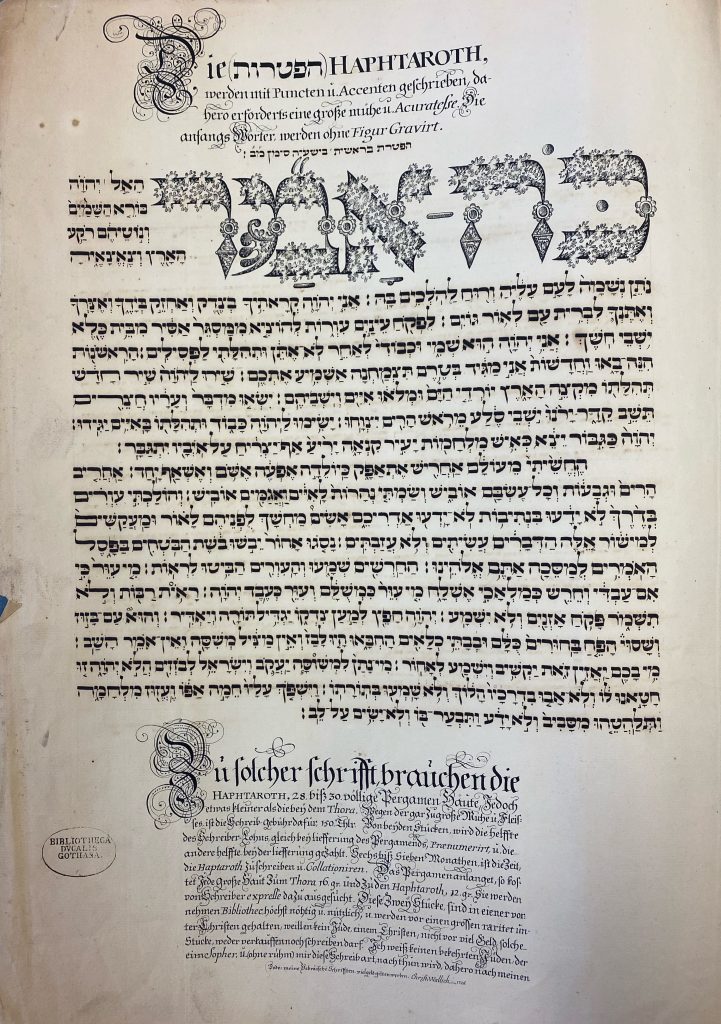
Wallich proceeds in a similar way on the second sheet, where the copying of the haftarot is described, likewise accompanied with a writing sample. This is remarkable since rabbinic literature as well as scribal manuals are primarily concerned with the writing of the STaM and – if at all – with the copying of the megillot.

Wallich first notes:

Die (הפטרות) HAPHTAROTH werden mit Puncten u. Accenten geschrieben dahero erforderts eine große mühe und Acuratesse. Die anfangs Wörter werden ohne Figur Gravirt.

[The (הפטרות) haftarot are written with punctuation and accents, so it requires great effort and accuracy. The initial words are engraved without figures.]

This brief remark is followed by another writing example, drawn from the Haftarah Yeshayahu to the Parashah Genesis 1:1-6:8, which corresponds to the prophetic passage Isaiah 42:5-25. Wallich manages to transmit the passage with just a few embellishments to the letters in the form of fine hairlines, for example, on the lamed or the pe. Yet, the first words of the haftarah – כֹּה-אָמַ֞ר – are enlarged and decorated with floral ornaments that are entwined with the first letters.

Wallich explains below the artistically written prophet section:

Zu solcher schrifft brauchen die HAPHTAROTH 28 biß 30 völlige Pergamen Häute, Jedoch etwas kleiner als die bey dem Thora. Wegen der gar zugroße Mühe u. Fleisses ist die Schreib-gebühr dafür 150 Thlr. Von beyden Stücken wird die helffte des Schreiber-Lohns gleich bey liefferung des Pergamends Praenumeriert u. die andere helffte bey der liefferung gezahlt. Sechs bis sieben Monathen ist die Zeit die Haptaroth zu schreiben u. Collationiren. Das Pergamen anlanget so kostet Jede große Haut Zum Thora 16 gr. Und zu den Haphtaroth 12 gr. Sie werden vom Schreiber expresse dazu ausgesucht. Diese zwei Stücke sind in eiener vornehmen Bibliothec höchst nöthig u. nützlich u. werden vor einen grossen raritet unter Christen gehalten, weillen kein Jude einem Chriften nicht vor viel Geld solche Stücke weder verkauffen noch schreiben darf. Ich weiß keinen bekehrten Juden, der eim Sopher u. (ohne ruhm) mir diese Schreibart nachthun wird, dathero nach meinem Tode meine Hebräischen Schrifften viel geld gilten werden. Christ. Wallich 1726.

[With this script [size], the haftaroth require 28 to 30 complete parchment skins, but somewhat smaller than those of the Torah. Because of the great effort and diligence involved, the scribe’s fee is 150 Thalers. Half of the scribe’s fee is paid when the parchment is delivered, and the other half is paid when [the project] is completed. Six to seven months is the time [needed] to write the haftarot. The parchment costs 16 groschen for each large skin for the Torah, and 12 groschen for the haftarot. The skins are selected in advance by the scribe.
These two pieces are highly necessary and useful in a noble library and are considered a great rarity among Christians because a Jew may neither sell nor write such pieces for a Christian, not even for much money. I know of no converted Jew who is a sofer and (and without praising myself) can hold a candle to me in this art of writing, thus after my death, my Hebrew writings will be valued at much money. Christ. Wallich 1726.]

Forschungsbibliothek Gotha, AG 24a

Finally, the question remains as to who Wallich wrote these sample pages and the corresponding explanations? These two representative sheets actually evoke the impression that Wallich was advertising his skills in the art of Jewish writing in order to impress Christian customers. Apparently, converted Jews like Wallich still benefited from the interest in the Jewish tradition shown by Christian scholars, an interest which had already emerged at the beginning of the 16th century. The Enlightenment also saw a growing interest in the customs and rituals of Jewish teaching. This was approached with historical source criticism and an emphatically rational perspective – often fueled by pronounced anti-Semitism.

In fact, another document held in the Gotha Research Library allows us to understand the intended purpose of these remarkable sheets. A letter written by Wallich on 29 August 1726 in Leipzig to Ernst Salomon Cyprian, a Gotha church councillor and vice-president of the High Consistory, reveals that Wallich had already written various manuscripts for the ‘Meyersche Judenschule’ a few years earlier. The ‘Meyersche Judenschule’ was a project initiated by Johann Friedrich Mayer (1650–1712) at the University of Greifswald. As part of it, Jewish ritual objects were installed in the synagogue as an educational exhibition for students. Wallich, who had been registered at the University of Greifswald since 1706, was actively involved in this project. He equipped this educational synagogue with ritual objects and also contributed the corresponding explanations. Once this educational synagogue had later become part of the university library’s collection, Wallich enriched the exhibition in 1724, now called “Mayer’s Judenschule,” with a selection of ritually relevant writings from the Jewish tradition.

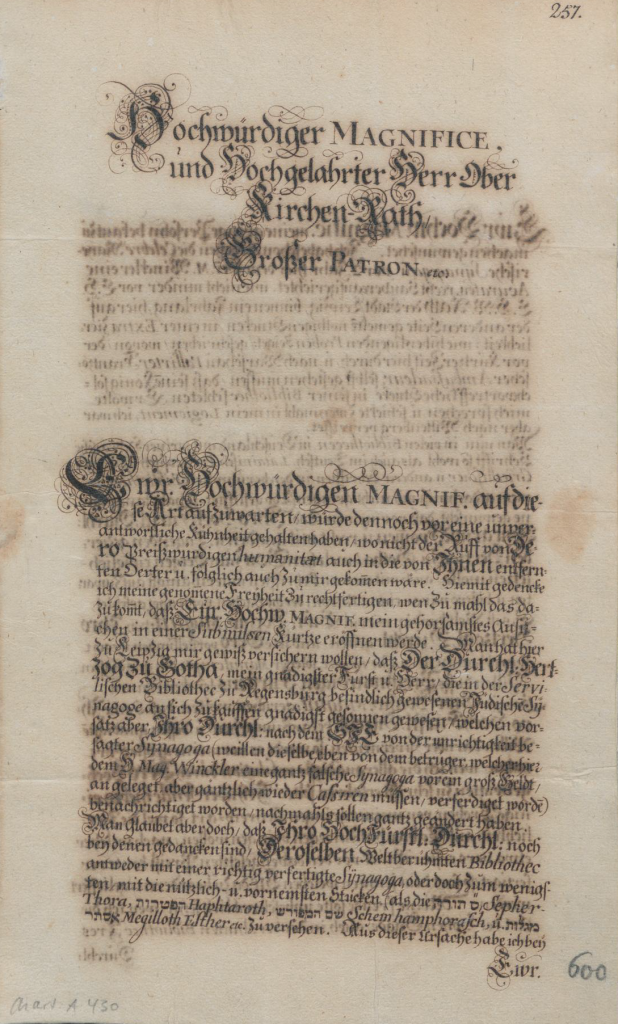
The abovementioned letter to Cyprian not only reveals which writings Wallich’s copied for the synagogue. We also learn from this letter what the sample sheets discussed above were all about:

[S. 1] … Man glaubet aber doch, daß Ihro Hoch Fürstl. Durchl. noch bei denen gedancken sind, Deroselben Weltberühmten Bibliothec antweder mit einer richtig verfertigte Synagoga oder doch zum wenigsten mit die nützlich u. vornemsten Stücken (als die ס״ תורה Sepher Thora, הפטרות Haphtaroth, שם המפורש Schem hamphorasch u. מגלות אסתר Megilloth Esther etc.) zu versehen. Aus dieser Ursache habe ich bey [S. 2] Ewr Hochw. Magific. meine gringe Persohn bekannt zu machen gewünschet. Ich habe schon ehedeßen dieselebre Mayerische Synagoge u. vor 2 Jahr dem […] Rath der Stadt Leipzig binnen ein Jahrlang hier auf der anderen Seite gemelten nöthigen Stücken in einer Extra Zierlichkeit – wie hibeyligenden Proben zeiget – geschrieben, wovon der vor kurtzer Zeit hier durch u. nach Warschau Passirter Frantzöscher Ambassadeur selbst gestehen müssen, daß seinem König solche vortreffliche Stücke in seiner Bibliothec fehleten.

[(p. 1) It is believed, however, that Your Most Serene Highnesses are still thinking of providing this world-famous library either with a properly prepared synagogue or at least with the most useful and most important pieces (as the ס״ תורה Sepher Torah, הפטרות haftarot, שם המפורש Shem Hamephorasch and מגלות אסתר Megillot Esther etc.). For this reason I have wished to make my low person known to [p. 2] Your Reverend Magnificant. I have already built the ‘Mayer’s Synagogue’ and two years ago, within a year, I produced the abovementioned necessary pieces for the […] Leipzig City Council with a particular delicacy – as the enclosed samples show – of which the French ambassador, who recently passed through here and in Warsaw, himself had to confess that his king lacked such excellent pieces in his library.]

It appears that Wallich extended to Cyprian an offer to both set up a synagogue for the library of the sovereign of Saxe-Gotha-Altenburg, designated for teaching purposes in the style of the ‘Mayerian Synagogue,’ and to provide it with appropriate ritual texts. Wallich enclosed samples of the Sefer Torah and the haftarot with his letter so as to convince Cyprian and – through him – the sovereign of his expertise in the art of Jewish writing. Wallich also added a few details about his career to this “letter of application,” which should not be withheld here:

[3] Meine gringe Person anlanget bin ich in Worms von reichen Jüdischen Eltern gebohren u. habe unter dem (unter den Juden gewesenen berühmten (רב Rabh) Rabbi Ahron Darschon das Rabbnische Studirt. Und weillen ich lust zu Schreiberey hatte, hat mein (gottgebe Seelig) verstorbenen Vatter das Sophroth (סופרות) Schreibkunst mich verlernert lassen u. bin ein Examinirter berühmter (סופר) Schreiber geworden, auch viermahl das Thora, eben so viel Haphtaroth u. viele Mesusoth, Kameoth, Tephillin u. ein Scheide Brieff unten Juden gantz Koscher geschrieben. (Leipzig, 29. August 1726)

[(3) As for my minor person: I was born in Worms of rich Jewish parents and studied rabbinics under the famous (רב Rabh) Rabbi Ahron Darschon. And because I had a desire to write, my deceased father (God rest his soul) taught me the art of writing and I became an examinated famous (סופר) scribe, also writing the Torah four times, as many haftarot and many mezuzot, Kameoth, tefillin, and a get, which is kosher among Jews.
(Leipzig, 29 August 1726)]

The two rather coincidental finds from our project week in Gotha lead deep into Jewish-German relations at the beginning of the 18th century and certainly merit closer examination.

Briefe an Ernst Salomon Cyprian, Bd.9, 1717

The First of its Kind: A Retrospective on Our Online Workshop (6-8 Nov 2023): Origin, History, and Interpretation of the Tagin and Otiyyot Meshunnot for Writing the STaM

Annett Martini & Dana Eichhorst

A paleographic particularity of the Jewish scribal tradition is that some letters of the strongly standardised square script featured within Torah scrolls are adorned with crownlets (tagin) or written in an unusual way (otiyyot meshunnot). Not the focus of academic discourse of the past, these decorations took the centre stage of our workshop Origin, History, and Interpretation of the Tagin and Otiyyot Meshunnot for Writing the STaM.

The Talmud specifies the seven letters gimel, zayin, tet, ayin, nun, tsade, and shin (ShaʿAṬNeZ GeṢ) for this uncommon letter ornamentation. Yet, mediaeval written testimonies from the time of the 12th to the 15th centuries (and some later testimonies of this phenomenon within the Megillot) present numerous exceptions to this antique limit and a remarkable wealth of different ornaments. Legal scholars from different regions saw in the unusual curlicues, arcs, little flags, and dashes a threat posed to the authentic gestalt of a Sefer Torah, and they urged for uniformity. However, even the standard work Sefer ha-tagin (10th/11th c.), which was widely received in scribe circles and provided copyists with a precise listing of words and letters for such modifications, could not curb the enthusiasm for these letter ornamentations.

Parallel to this uncommon writing practice, an exegetical tradition began to develop by which these crownlets and unusually written letters, and also the standardised letterforms were interpreted from rabbinic-ethical, mystical, and philosophical perspectives.

The goal of our workshop, which took place online from Nov 6-8, 2023, was to discuss the phenomenon of the tagin and otiyyot meshunnot for writing the STaM from two perspectives.

First, as a paleographic tradition that has developed different regional characteristics over time. Manuscript evidence of halakhic treatises on the correct visual appearance of these signs testify to a lively debate on the forms of tagin and otiyyot meshunnot. The authors or copyists of these writings in different times and regions gave manyfold examples which reveal the enormous richness of shapes. Moreover, the artefacts themselves – scrolls and even codices, dating from the Middle Ages and modern times (here especially the Megillot) – surprise with a great wealth of variants. The workshop aimed to provide an opportunity to present material witnesses, new insights into the origin of tagin, and various sources for describing the shape of the unusual letters. 

Second, as a subject of exegesis: Research has almost completely neglected the numerous exegetical approaches towards the forms of the tagin and otiyyot meshunnot that flourished especially in the Middle Ages, although this literature provides deep insight into both the intellectual history and the cultural memory of Diaspora Jewry. The workshop opened up space for rabbinic, mystical, philosophical, and educational conceptions regarding these special letters to determine which role they played on a metaphysical level.

When we started planning our workshop, we assumed that we would gather together a handful of colleagues interested in this paleographic peculiarity of tagin and otiyyot meshunnot. The overwhelming response to our Call for Papers, published more as a formality than anything else, though, surprised us: Scholars from around the world dedicate themselves to these special letters. Reading their abstracts, which approach the topic of tagin and otiyyot meshunnot from many different perspectives, was an exciting activity, as was putting together an incredibly rich and diverse programme. This workshop presented the very first opportunity for scholars of tagin and otiyyot meshunnot to come together, share and discuss their research. 

Day One

The first presenter to start was Robert VanHoff. In his lecture, Robert dealt with an incredibly interesting phenomenon of the Masoretic tradition, namely the different visual representations of the divine name in the works of the Tiberian scribes Ahron ben Asher and Ephraim ben Buya’ah. There is no doubt that the divine name already received special attention in the ancient Jewish scribal tradition, as reflected in distinctive markings. This is all the more interesting as there are also indications in mediaeval Torah scroll witnesses of a practice of writing the tetragrammaton that deviates from the normal scribal flow.

To shed light on the phenomenon of letter decorations in the Middle Ages, Mark Farnadi Jerusálmi took us further back in time. He posits that letter shapes found in mosaic inscriptions in Byzantine synagogues provide insight into the development from ziyyunim to the mediaeval tagin (crowns). He, therefore, compared the ShaʿAṬNeZ GeṢ group from ancient mosaics with the shape of letters from manuscripts in the classical sense, written on parchment, and investigated the evolution of these graphic elements. 

Marc Michaels provided insights into his research on various textual witnesses of the scribal manual Sefer Tagin, which is so important for both scribes and researchers dealing with the phenomenon of tagin and otiyyot meshunnot. In his lecture, he was able to identify lines of tradition that differ from one another in terms of content but also in the structural arrangement of the material.

Following these two presentations, the legitimate question arose as to whether and how tagin differ from ziyyunin. This question, in turn, led to the justified demand for a glossary, which will now be prepared in collaboration with the participants of the workshop.

Mordechai Weintraub added another perspective on the Sefer Tagin and posed the intriguing question of the extent to which the determination of the position and form of the tagin and otiyyot meshunnot was guided by exegetical considerations. This question was a recurring theme throughout the workshop, in fact, and was answered by the speakers in different ways.

Jen Taylor Friedman illustrated how helpful a quantitative analysis of mediaeval sources can be. The comparative analysis of the manuscripts she examined and annotated made clear that scribes in Ashkenaz in particular tended to modify the letters in creative ways. In so doing, they not only deviated markedly from the standards of the scribal manual Sefer Tagin, but also did not seem to be particular about following a “correct” or standardised way of writing the Torah. According to her, these strikingly strong deviations could be due to specific exegetical approaches to interpreting the tagin.

Mauro Perani brought the first of three wonderful workshop days to a close with his lecture, in which he offered a comprehensive overview of the history of tagin and otiyyot meshunnot both as a palaeographical phenomenon in Torah scrolls and as a subject of exegetical consideration. Using the famous Bologna scroll, whose “rediscovery” and research are to his credit, as an example, he illustrated the extent to which mediaeval scrolls differ from the later canonised system, according to which only the seven letters ShaʿAṬNeZ GeṢ ought to be decorated with tagin. At the same time, only eighty per cent of the tagin in the Bologna scroll correspond to the instructions of the Sefer Tagin, prompting one to ask how principle (or none at all) was followed when adding the remaining twenty per cent.

Day Two

Sholom Eisenstat shared with us his love and curiosity about the so-called inverted nun in Numbers 10:35-36 and introduced us to the evolution of this scribal phenomenon. In addition to Greek editorial or diacritical signs as possible precursors or parallel phenomena, he also considered the extensive accompanying discussion about the design and position of this palaeographic anomaly in rabbinic literature.

The Biblioteca Palatina in Parma holds a manuscript containing a relatively short text entitled Kitrei Otiyyot Tefillin, which is attributed to Rabbi Yehuda he-Hasid. In her lecture, Emese Kozma traced the history of this text, introduced its content and emphasised its halakhic character. Through philological analysis of this and other texts, she not only established references to other writings from the circle of the Haside Ashkenaz, but also contextualised it within this Jewish literary tradition.

While Emese Kozma considered the text she analysed not to be a mystical treatise on the tagin, Dana Eichhorst showed in her lecture on the Sefer Tagin that is attributed to Eleazar of Worms that the tagin in this mediaeval work are certainly interpreted in a speculative kabbalistic way. Through a comparative textual analysis, for which she inter alia used Eleazar’s main speculative work, Sode Razayya, she was able to demonstrate that a provenance in the circle of the Haside Ashkenaz is probable and that Eleazar’s interpretation of the tagin must also be read against the background of his understanding of the decisive role of the Hebrew letters as divine means of creation.

Gabriel Slamovits focussed on orthographic anomalies using the example of the majuscule letter Bet and the minuscule letter He, as they are displayed in Torah scrolls at the respective beginning of both of the biblical creation accounts. He interpreted this palaeographic phenomenon based on contemporary readings of the two biblical accounts of creation, offering an original modern exegesis of these letterforms.

By providing and describing a variety of different mediaeval source texts, Yosef Ginsberg pointed out an existing gap in research: The interpretation and reflection of tagin and otiyyot meshunnot in kabbalistic texts. Thereby, he also showed to what extent the manual Sefer Tagin reverberates in the kabbalistic sources he presented.

Anne May Dallendörfer presented her research on the important late mediaeval scribal handbook Barukh she-amar. In addition to the complicated history of the text, she showed what insights we can gain from the text about the problems scribes faced and about the solutions they found.

Day Three

As curator at the Museum of the Bible, Jesse Abelman provided a special insight into a mediaeval Torah scroll of the museum’s collection. The changes and corrections made in the scroll affecting tagin and otiyyot meshunnot allow us to reconstruct the scroll’s unique textual history. The corrections found in this scroll, however, also reflect prevailing norms of scribes in dealing with tagin and otiyyot meshunnot.

Because the use of decorative elements and special letters in Torah scrolls is ultimately subject to constant change, Abraham Marmorstein explained how the halakhic authorities dealt with letter forms and how the legal regulations were justified in each case.

The lectures by Jonathan Homrighausen and Dagmara Budzioch were dedicated to the tagin and otiyyot meshunnot in Esther scrolls. Jonathan presented the special case of the emphasised and enlarged Waw in the name Vaizatha and how this palaeographical peculiarity in the Book of Esther was discussed by rabbinical scholars in various ways.

Based on hundreds of examined manuscripts, Dagmara demonstrated that tagin and otiyyot meshunnot play, indeed, an important role in Esther scrolls as well. Thus, alongside Torah scrolls, they constitute an object of research in their own right within the study of the history of writing sacred texts.

The Book of Esther was also the starting point for Emmanuel Bloch’s lecture. Unlike Jonathan’s lecture, the focus here was not on the enlarged letters, but on the small letters in chapter 9 and how their numerical value of 707 is interpreted in some orthodox Jewish circles under consideration of the biblical account as prophetic code of sorts, connecting the story of Esther’s triumph to the Nuremberg trials in the Jewish year 5707.

Deborah B. Thompson’s lecture, which was the final one in our three-day online workshop, focussed on another important textual source for the study of tagin and otiyyot meshunnot, namely tefillin. In her presentation, Deborah looked specifically at those tefillin scrolls that were offered for sale on online marketplaces and traded on these platforms as objects of early modern Hasidism. A special feature of these offered tefillin scrolls is the presence of otiyyot meshunnot. Deborah argued that the question of whether the early modern Hasidic tradition preserved a particular scribal practice needs to be further explored.


Our workshop provided a venue and forum for the first international gathering of a scholarly community explicitly concerned with the subject of tagin and otiyyot meshunnot and Jewish writing practice. The many different presentations on a wide range of aspects relating to the palaeographical as well as the religious, cultural, and intellectual-historical dimensions of tagin, otiyyot meshunnot, and the writing practice of Jewish sacred texts provided many insights into ancient, mediaeval, and modern scribal traditions. At the same time, it became clear that many research questions on these complex topics are yet to be explored and resolved. We intend to publish an anthology based on the further research of our presenters. This collection of essays will be the first comprehensive and interdisciplinary publication on the subject (year of expected publication 2025), bridging at least some research gaps, clarifying open questions, and posing new ones.

The Jewish scribe: a guardian of secret knowledge

Anne May Dallendörfer

Scribes can generally be considered artists and craftsmen. In contexts like the Jewish one, they are first and foremost preservers of holy texts and keepers of tradition. They are thus assigned a social role of great importance and their work is subject to strict rules with regards to form and ritual purity. At times, while preserving a fixed text and the tradition which depends on it, the scribe simultaneously gains access to a knowledge that is otherwise hidden from the other community members. He thus acts as a keeper of the community’s tradition at large but also as a guardian of a secret knowledge kept and preserved by only a few.

We find one such portrayal of the scribe in the 13th century Jewish scribal manual “Barukh she-amar” which has been attributed to the scribe R. Samson ben Eliezer.[1] In this manual, R. Samson sets out to rectify many of his fellow scribes’ mistakes and negligence concerning the writing of STaM (Sefer tora, Tefillin and Mezuzot). He thereby deals extensively with the manufacture of kosher parchment and the rules for writing. One aspect of these rules is the correct form of the Hebrew letters. It is here that the author discloses that he is in possession of some hidden knowledge, as he reveals the metaphysical meaning behind the letter shapes. Concerning this latter part, however, he seems hesitant to reveal too much as these are the secret aspects of his scribal knowledge. He even calls himself a “gossip” fearing he might disclose too much. Here is an excerpt from his writing:

And here I am, “A gossip goes about telling secrets” (Proverbs 11:13) with a little allusion for those who understand in accordance with my limited understanding. Although in my sins I am not worthy to allude to these great secrets which even hinting at [the fact] that I have a little knowledge [of them] is forbidden to me.

Perhaps the prohibition to share these “great secrets” hidden in the letter shapes is just a rhetorical device to give more weight and a sense of importance to his ensuing words. Nonetheless, throughout Rabbi Samson’s writing, one senses an underlying fear that this knowledge might fall into the wrong hands, much of which “was not given to be written.”

Though he finds himself unworthy to share these great secrets, he nonetheless does so, albeit in a quite enigmatic way:

For the dalet points out that the ‘ayin is kneset Israel and the oral Tora, the bride mentioned in Song of Songs, and she is Bakol the daughter of Abraham our father, and she is the kingdom of the house of David, and this dalet which is in eḥad is a thick one. And the vav which is on top of [the dalet] hints that the tav is the six ends [of the world] and a looking glass, it is the bundle of life, the tree of life, and the written Tora, and the two tagin which are on the vav hint at Bina and Ḥokhma the supreme, preceding and splendid, until Ein Sof.

Whatever these symbols hidden in the shape of the letters dalet and vav might mean, R. Samson ends with the comment:

And our rabbis, blessed be their memory, and the learned will understand. And the Lord, may He be blessed, revealed to me wonders from His Tora because of His great name.

It seems clear that Rabbi Samson believed that in his profession as a scribe he had witnessed “wonders” from the Tora through which he had received knowledge of the great secrets of God. In their form and shape, the Hebrew letters allude to symbols whose meaning is not self-explanatory at first sight. It is down to the scribe to learn, preserve and pass on this knowledge – to those who understand. Besides continuing the textual tradition, in learning the correct shape of the Hebrew letters the scribe acts as a preserver of a secret knowledge about God which is otherwise hidden from the uninitiated.


[1] It has been subject to debate whether R. Samson really was the author or whether certain excerpts can be attributed to others. The themes explored in the passage mentioned here have also been connected with his student Yom Tov Lipmann.

Writing the Names of God from the Perspective of the Haside Ashkenaz

Annett Martini

The authors of Sefer Hasidim turned with particular diligence to what is probably the most delicate subject of scribal literature, namely, the writing of the names of God in Torah scrolls. Paramount in the Hasidic context is the high quality of the writing materials, i.e., of the inks as they concern the names of God, and also the duty of the scribes to avoid disturbing in any way with their writing habits the notion of the absolute perfection of the name. God’s name must not exhibit any holes in its immediate surroundings or even be perforated itself. In the unfortunate case of a necessary correction, “approach not where the name is, so as not to pierce the name [with the needle], but there, where the parchment is unwritten.” A particular meticulousness in the script also affects to a certain degree the words before and after the names of God:

„A sofer who has written the name of God but without rendering it readable, should again go over it with the qulmus so that the letters of the word become readable. However, if he has already begun to write the name of God and not yet completed [it], he must not suspend [work on] the letters of the name in order to mend another word.“

(SH Ms Parma 3280 H, §715)

Yet it is not only the material, but also the flow of the writing act itself that does not tolerate absences or interruptions. The Sefer Hasidim takes up the image of the scribe known from ancient scribal literature, where a king is patiently waiting to be greeted by the sofer who is himself in this moment recording the name of the heavenly king on the scroll. In such a precarious moment, the scribe must not look up when one less than him enters the writing space and addresses him.

If he is not permitted to respond to the needs of others, how much more important is it then that the scribe also represses his own needs such as the urge to spit.

„When a sofer is writing the name of God, he may not spit as long as he is not finished, but only when he has written everything.“

(SH Ms Parma 3280 H, §719)

Ultimately, the Sefer Hasidim provides the scribe with solutions in the event that a name has been inadvertently misspelled.

One exceptionally interesting writing instruction, which clearly goes beyond the scope of the rabbinic guidelines, is found in the following paragraph:

„It is written [Ex 39,30]: [And they made the plate of the holy crown of pure gold,] and wrote upon it a writing, like to the engravings of a signet, HOLINESS TO THE LORD [יהוה]. [The employed plural] and they wrote teaches that the name should be written in the presence of a greater number of people meaning ten persons. Scripture says [Lev. 22,32]: [Neither shall ye profane my holy name;] but I will be hallowed among the children of Israel: [I am the LORD who hallows you.] Thus, the rishonim, when a Sefer Torah was written, wanted the names to be written by ten righteous. There are some who say: ‘It is necessary to write [the name of God] in the presence of a quorum as a reminder that it was written for the sake of [the divine name]. For if it was not written for the sake of [the name] [the scroll] should be stored in a genizah. This holds true for every single letter.“

(SH Ms Parma 3280 H, §1762)

This passage is remarkable because its author calls for bearing witness to the ritual sanctification of God’s name in the writing of a Sefer Torah. A group of ten “righteous people” should gather in the writing space for the transcription of each name, by which the tetragram JHWH alone is probably meant, to ensure the consecration of the name. The “ten righteous” awaken associations with the story of Sodom, which could have been saved by the presence of only ten righteous souls. It is said of the righteous (zaddiq), of whom there are but few in each generation, that they maintain an impeccable way of life and an intimate relationship with God. Their presence when God’s name is written not only guarantees the holiness of this moment, in which God represented by His name enters the world, but it also refers to the grace of God, who ensures through these righteous the continued existence of the world. 

We do not know to what extent this procedure was actually put into practice. In the course of our project work, however, a growing number of medieval artifacts from the Ashkenazic region has been encountered that attest to a particular performative effort in writing the names of God. Thus, one finds not only special markings of the tetragram, but also names of God obviously added later to the Torah scrolls, standing out from the rest of the text by a different ink color or by letter size and shape.

Furthermore, studies of some surviving artifacts give reason to believe that the Hasidim also maintained their own tradition of placing tagin and otiyyot meshunnot as described in the relevant treatises on the subject within Hasidic circles. These „suspected cases“ will be further investigated in the coming months and – hopefully – be presented and described in a detailed publication soon.

A competition among letters

Which will be the first one in the Torah (and how does this relate to a Torah scroll)?

Rebecca Ullrich

Anyone skimming through Midrash Bereshit Rabba comes across a very striking passage. In the name of Rabbi Yonah, quoting Rabbi Levi, a question is raised: Why was the world created with the letter „Beit,“ the second letter of the alphabet? Initially, it is stated that one should not explore what was before the creation of the world because the letter ב is closed off on its right side and open on its left; it is closed to the past, but open to the future.

This is followed by an interpretation by Rabbi Yehudah ben Pazzi in the name of Bar Kappara. He answers this question by explaining that the letter ב, with its numerical value 2, indicates that God created two worlds, this world and the world to come. After further interpretations in the name of various rabbis, the interpretation of Rabbi Elazar bar Chanina in the name of Rav Acha follows – and proves particularly interesting:

„For 26 generations, the letter Aleph protested before the throne of God and criticised the Lord of the world: „I am the first of the letters, and you did not create your world with me!“ The Holy One, blessed be He, said to the letter, „The world and its filling were created only because of the merit of Torah, for it says: (Prov 3:19) „Adonai set the earth with wisdom“. Tomorrow I will give the Torah at Sinai and will open the beginning only with you, for it is said: (Exo 20:2) „I (אנכי) am Adonai your God“. „

Genesis Rabba 1,10

God, who presents here a midrash of his own in the style of the rabbis, lets the letter Aleph wait until the next day when he will give Israel the Torah at Sinai, which will begin with an Aleph. According to God, he did not create the world because of a letter, but solely because of the merit of the Torah and to have his teachings obeyed.

This small passage is only one of several instances in rabbinic literature in which letters appear as actors. Genesis Rabbah 47:1, for instance, offers an interpretation in which the letter Yud, the smallest of all Hebrew letters, complains about having been removed from the name of Sarah (Sarah’s name was initially Sarai (Gen 17:15). God calms this letter down too, explaining that he had taken it from the end of a woman’s name and would now put it at the beginning of a man’s name: „And Moses called Hosea bin Nun Yehoshua“ (Num 13:16).

Around the 10th-11th century, more so-called „Smaller Midrashim“ appear that adopt the motif of personifying letters that give life to them. Apart from the beginning of the midrash „Asseret haDibrot“ („Midrash on the Ten Commandments“), the alphabet midrash, attributed to Rabbi Aqiva, is probably the best-known text in which letters appear personified: with voices, emotions and feelings. In this text, which has come down to us in various versions, the letters appear in reverse order before God, from the last to the first letter in the alphabet, one after the other. They ask Him to create the world with them, with interpretations of their forms and decorations.

Rabbinic literature includes several other short texts about more specific phenomena, such as letters to be written in larger or smaller font sizes, as well as letters that receive tagin („crowns“) or a certain dot. These special shapes and decorations are often found in Torah scrolls. Some of them also feature in Masoretic traditions. If so, they are discussed without justification as to why these letters have special features. Later scribal literature, such as Meiri’s Qeriyat Sefer, include lists of letters that need to be written in a larger font size.

The „Smaller Midrashim“ take this a step further and justify these phenomena, discussing, for example, the enlarged spelling of the letter „Beit“ (ב) of בראשית (Gen 1:1) in Torah scrolls. The reason given for the larger spelling of the letter is „that it precedes everything in the Scriptures.“ In the Shema Israel (Dt 6:4-9), too, there are two letters to be written larger in the first verse: The letter ע in שמע („hear“) and the letter ד in אחד („one“). The larger dalet in „Echad“ is needed, so the explanation, to prevent confusion between the letters “Dalet” (ד) and „Resh“ (ר), which look fairly similar, and mistakenly reading „another“ (אחר) instead of “one”. The enlarged letters are reminders for the correct pronunciation of the word at hand. Thus, in these rabbinic texts, letters become carriers of a message: They are assigned attributes in addition to their function of representing a sound. This way, they can also function as memory aids for motifs and events that should be remembered at this point in the text.

Schreiben als heilige Aufgabe

Tagesspiegelbeilage vom 26. November 2022 von Anne Stiller

Forschende arbeiten zur Frage, wie Torarollen von der Antike bis zur Neuzeit hergestellt wurden und bis heute werden

Rabbiner Shaul Nekrich (r.) hält anlässlich des 76. Jahrestags der Befreiung des deutschen Vernichtungslagers Auschwitz am Internationalen Holocaust-Gedenktag die historische Sulzbacher Torarolle von 1792. Links: Rabbiner Elias Dray.
Bildquelle: picture alliance/dpa/AFP POOL/Odd Andersen

Auf dem Papier abgebildet sind 188 Zeichen. Es ist etwa einen mal zwei Meter groß und hängt an der Wand hinter dem Schreibtisch – eigentlich ist es Tapetenrolle, in diesem Fall aber ein sehr großer Notizzettel. Die Zeichen sind in Wahrheit die 22 Buchstaben des hebräischen Alphabets und ihre zahlreichen Variationen. „Ich muss immer alles aufschreiben und visualisieren“, sagt Annett Martini. Auf die unterschiedlichen Schreibweisen der Buchstaben ist die promovierte Judaistin von der Freien Universität Berlin in Torarollen und Schreiberhandbüchern aus der Zeit vom 9. bis 15. Jahrhundert gestoßen. Die hebräischen Buchstaben sind verziert mit sogenannten Krönchen, also zusätzlichen Strichen, kleinen Bögen oder Fähnchen. „Die Krönchen stehen für eigene Narrative, die über den eigentlichen Text hinausgehen. Sie wurden nicht einfach gesetzt, weil es schöner aussieht“, erklärt Annett Martini. Dem Glauben nach habe Moses am Berg Sinai die Tora mit den Krönchen offenbart bekommen. Wofür genau die zusätzlichen Zeichen an den Buchstaben stehen, sei aber eine Frage der Auslegung. Mystiker zum Beispiel interpretierten einige der Krönchen aufgrund ihrer Form als Ohren, die bis in die Schöpfungszeit zurückhören könnten und dadurch zeigten, wie Gott die Welt geschaffen habe.

In den kommenden vier Jahren sollen die handschriftlichen Notizen auf Tapetenrolle digitalisiert werden und dann Forschenden und Interessierten online frei zugänglich sein; neben der digitalen Enzyklopädie soll auch eine virtuelle Torarolle erstellt werden. Das Vorhaben ist Teil eines neuen Forschungsprojekts mit dem Titel „ToRoll: Materialisierte Heiligkeit: Torarollen als kodikologisches, theologisches und soziologisches Phänomen der jüdischen Schriftkultur in der Diaspora“, bei dem es um jüdische Schrifttraditionen bei der Herstellung von Torarollen geht.

Eine Torarolle umfasst den Text der fünf Bücher Mose; sie gilt als das wichtigste Schriftwerk des Judentums, auch weil sie als Ritualgegenstand zentral ist für einen jüdischen Gottesdienst. Wieso sollte man sich dafür interessieren, wie eine solche Rolle hergestellt wurde? „Weil die Textanfertigung Teil des kulturellen Erbes des Judentums ist – und damit für Jüdinnen und Juden immens wichtig“, erklärt Annett Martini.

Auch eine virtuelle Torarolle soll neben der digitalen Enzyklopädie erstellt werden

Die Forschungsergebnisse könnten zudem etwas über das historische Verhältnis von Jüdinnen und Juden zu ihren nichtjüdischen Nachbarn aussagen. „Es gibt viele Vorschriften, die bei der Herstellung einer Torarolle einzuhalten sind. So müssen zum Beispiel Pergament und Tinte koscher sein. Das heißt unter anderem, dass beide Materialien möglichst von Angehörigen des Judentums nach alter Rezeptur hergestellt werden müssen“, erläutert Annett Martini. In Europa wurde das aber etwa vom 12. Jahrhundert an zur Herausforderung, als Jüdinnen und Juden in christlich geprägten Gesellschaften zunehmend aus Handwerksberufen verdrängt wurden. „Da wurde dann auch mal Tinte verwendet, die nicht aus jüdischer Herstellung kam. Oder man kaufte Beschreibstoffe wie Pergament aus christlicher Produktion.“ Das Studium von Quellen aus dieser Zeit lässt tief in das jüdisch-christliche Verhältnis blicken und kann dazu beitragen, überholte Sichtweisen von klaren konfessionellen Grenzen und Religionsgemeinschaften, die nur unter sich bleiben, zu hinterfragen.

Die Forschenden des Projekts untersuchen nicht nur die Schreiberliteratur aus der Antike und dem Mittelalter, sondern befassen sich auch mit neuzeitlichen Auffassungen zur Herstellung einer koscheren Torarolle. Hierbei stehen bestimmte Personen ganz besonders im Mittelpunkt: die Schreiber – „und seit einiger Zeit auch die Schreiberinnen“, sagt Annett Martini. In den letzten Jahrzehnten gibt es zunehmend auch Jüdinnen, die sich dem Schreiben einer Torarolle widmen; bis dahin war das ausschließlich Männern vorbehalten. Wie stehen jüdische Gemeinden zu dieser Entwicklung? „Das kommt darauf an. Orthodoxe Gemeinden erkennen Torarollen, die von Frauen geschrieben wurden, nicht als koscher an. Das heißt, sie würden sie nicht im Ritus verwenden. In liberalen Gemeinschaften ist die Akzeptanz deutlich höher“, erklärt Annett Martini.

Welche Stellung eine Schreiberin oder ein Schreiber innerhalb einer Gemeinde hat und was diese Personen auszeichnet, wollen Annett Martini und ihre Kolleginnen und Kollegen mithilfe von qualitativen Interviews herausfinden. Während einer Studienreise durch Israel hat Annett Martini bereits mit einigen Schreiberinnen und Schreibern gesprochen. „Geprägt durch die mittelalterlichen Quellen, hatte ich ein ziemlich romantisches Bild von einem Schreiber. Das wurde komplett auf den Kopf gestellt. Ein Schreiber berichtete mir, dass er erst in einem Jobcenter auf die Möglichkeit aufmerksam wurde, den Beruf des Sofer-STaM – eines professionellen Schreibers – neun Monate zu erlernen und dann in diesem Bereich zu arbeiten. Er war glücklich darüber, dass er nicht mehr trennen musste zwischen einem profanen Teil des Lebens, in dem eben auch für den Lebensunterhalt gesorgt werden müsse, und dem religiösen Leben“, erzählt Annett Martini. „Ein anderer Schreiber hingegen erzählte, dass er sich nur noch der Kalligraphie widmete, da er sich von den zahlreichen Schreibregeln, die es für eine Torarolle gibt, in seiner Kreativität eingeschränkt fühlte.“ Überraschend und beeindruckend seien für die Judaistin auch Unterhaltungen mit Schreiberinnen gewesen. Trotz der Kritik aus einigen orthodoxen Gemeinden und der Schwierigkeit, Lehrer zu finden, die auch Frauen in der Schreibkunst unterrichten, seien sie fest entschlossen, sich ganz dem Schreiben der heiligen Schriftrollen zu widmen.

„Die Textanfertigung ist Teil des kulturellen Erbes – und damit immens wichtig“

Annett Martini und ihre Kolleginnen und Kollegen haben bis 2026 – bis dahin läuft das Projekt – viel vor: „Uns interessiert die komplette Entstehungsgeschichte insbesondere mittelalterlicher Torarollen. Wann und unter welchen Bedingungen wurden sie geschrieben? Wie viele Personen waren an dem Prozess beteiligt? Welche Materialen kamen dabei zum Einsatz? Und was ist ihre Geschichte in den meist christlichen Bibliotheken?“ Die Judaistik, die sich vor allem mit der Geschichte und Literatur des Judentums befasst, würde jedoch irgendwann an ihre Fachgrenzen stoßen, wenn sie versuchte, diese Fragen im Alleingang zu beantworten. Darum sind neben den Instituten für Judaistik und Kunstgeschichte der Freien Universität Berlin auch die Bundesanstalt für Materialforschung und -prüfung (BAM) sowie das Karlsruher Institut für Technologie (KIT) an dem Forschungsprojekt beteiligt.

Geschichts- und kulturwissenschaftliche Fächer könnten von technischen und naturwissenschaftlichen Ansätzen profitieren, meint Annett Martini. „Mit computergestützten Methoden können wir sehr große Textmengen analysieren und miteinander verknüpfen. So können zum Beispiel in der geplanten virtuellen Torarolle nicht nur paläographische Traditionen vergleichend erfasst werden. Die digitale Edition von Texten aus unterschiedlichen Zeiten und Regionen ermöglicht uns darzustellen, wie sich der Wissensschatz zur Herstellung von Torarollen entwickelt hat und auf welchen Wegen er weitergegeben wurde.“ Informationen zum Hintergrund von jüdischen Religionsschriften – etwa wie die Buchstabenformen und -krönchen innerhalb der jüdischen Schriftauslegung aufgefasst und bearbeitet wurden – könnten visuell besser erfasst und zugänglich gemacht werden.

Finanziert wird das Projekt mit 2,4 Millionen Euro vom Bundesministerium für Bildung und Forschung im Rahmen einer Förderlinie, deren Ziel es ist, sogenannte Kleine Fächer wie die Judaistik zu stärken. Als Kleine Fächer gelten wissenschaftliche Disziplinen, die über nur wenige Professuren verfügen. „Für das Fach Judaistik ist das eine Riesenchance, sich für andere Fachrichtungen und die Öffentlichkeit gleichermaßen zu öffnen“, sagt Annett Martini. Dafür sind zwei weitere Einrichtungen in das Projekt eingebunden: die Mainzer Akademie der Wissenschaft und Literatur sowie die Staatsbibliothek zu Berlin – Preußischer Kulturbesitz. „Zusammen mit der Staatsbibliothek etwa wollen wir am Ende eine Ausstellung zeigen, in der es um heilige Schriften geht. Nicht nur aus dem Judentum, sondern auch aus dem Christentum und dem Islam sowie aus dem ostasiatischen Raum sollen religiöse Texte ausgestellt werden. Kurz: aus verschiedenen Religionen, Regionen und Epochen“, sagt Annett Martini. Vielleicht erhält dann der große Notizzettel mit den 188 Buchstabenvarianten in der Ausstellung einen Ehrenplatz.