As part of my doctoral studies, I had the privilege to undertake a research stay as a visiting scientist in a partner laboratory at Weill Cornell Medicine (WCM), the esteemed medical college and biomedical research institute of Cornell University, located in the heart of New York City.
Supported by the ERASMUS+ internship program, which provided a travel allowance and monthly funding, this experience allowed me to immerse myself in WCM’s dynamic research environment. During my stay, I worked on core research questions of my doctoral project, leveraging the expertise and equipment of the partner laboratory. My experiments were predefined, and we have been collaborating with the partner laboratory previously. Extensive preparatory work (including both wet lab and outlining of the project in Berlin prior to my stay) has allowed me to visit for a period of “only” three months. If you want to go abroad (to the US), I recommend a time frame of a minimum of six months.
WCM, the biomedical research institute and medical college of Cornell University, is uniquely situated on York Avenue in New York City, distinct from the main campus in Ithaca. WCM has a longstanding tradition of advancing fundamental biomedical research while contributing to its dynamic scientific neighborhood. Research at WCM targets a multitude of human diseases, including cancer, cardiovascular, metabolic, neurodegenerative diseases. Bench-to-bedside approaches aim to accelerate the development of novel treatments for previously listed diseases. To obtain a broader view on ongoing research in this area and to widen your horizon, I highly recommend looking out for talks and seminars within WCM and neighboring institutes such as The Rockefeller University or Memorial Sloan Kettering Cancer Center. By walking through the corridors of WCM you will observe flyers and invitations to numerous Colloquia.
Weill Cornell Medicine (WCM) is located along York Avenue on Manhattan’s Upper East Side, an area renowned for its concentration of several other medical and research institutions. Sharing its neighborhood with The Rockefeller University, Memorial Sloan Kettering Cancer Center, and NewYork-Presbyterian Hospital, WCM is at the heart of one of the world’s most vibrant biomedical research corridors. This special environment offers an excellent opportunity for multi-disciplinary research approaches. The campus is well-connected to the rest of Manhattan and the greater New York City area via several subway lines, buses, and commuter rail options, making daily commutes and access to the city’s resources convenient for students, researchers, and visitors alike.
The composition of the research group I was allowed to join had a ratio of 4 to 1 of Post-Docs to Doctoral Candidates. In combination with a successful group leader who publishes in renowned scientific journals and became a professor relatively early in their scientific career, I was working in a highly skilled environment with project and research ideas build on one another and pointed strongly forwards. WCM has a multitude of specialized top-notch core facilities with highly skilled experts in fields like e.g. cell sorting or microscopy. Although I did not dive too deep into the research topic of the hosting laboratory, as I brought my own research project with me, I can highly recommend joining WCM if you are a highly committed student and interested to work in a field of basic research with translational approaches utilizing modern methods. Be aware that basic science at WCM (or the US in general) comprises frequent usage of in vivo models which might be challenging for some.
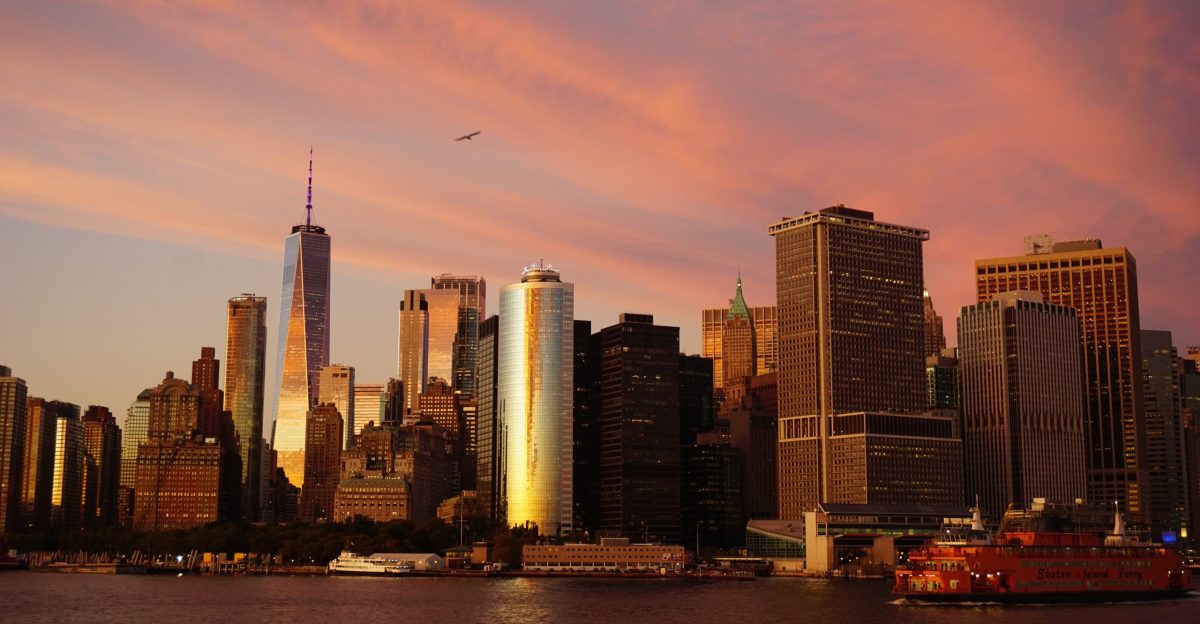
New York City, a global hub of culture and innovation, offers unparalleled opportunities for medical professionals and researchers. Known for its diverse population and world-class healthcare institutions, NYC fosters advancements in public health, clinical care, and biomedical research. Beyond medicine, the city thrives as a center for art, history, cuisine, and entertainment, creating a dynamic environment where science and culture intersect, making it an excellent place to educate yourself aside from your field of science. The confluence of intellectual precision and cultural vibrancy makes NYC an exceptional setting for professional and personal growth.
With New York City being one of the most densely populated metropolitan regions of the world, it is no surprise that living space is scarce and expensive. Unfortunately, WCM does not offer housing to international visiting (graduate) students. However, it offers tips and resources for off-campus housing (which I did not utilize). I initially started looking for housing using Facebook groups but have quickly perceived the fraudulent nature of listings presented there. Only through coincidence, I came across listingsproject.com which I can highly recommend to anyone looking for a place to stay in NYC. Rents can vary strongly throughout the boroughs and between listings. Expect rents starting at $1,600 for a room in a shared apartment. With Manhattan being the most expensive borough of NYC, I recommend looking for single rooms within neighborhoods in Queens / Brooklyn adjacent to subway lines allowing direct transportation to the Upper East Side, such as the 4, 5, Q and F Trains. Manhattan is a busy place; you can have a more relaxed commute to and from WCM outside of core rush hours. Unless you are an experienced and cautious cyclist, I would not recommend biking on busy streets in Manhattan. However, you can find bike lanes on many core streets. I recommend using a citi bike for short commutes or for rides through the parks! Aside from more affordable rent prices in Brooklyn and Queens these areas generally offer more affordable places to go to and in my opinion a more interesting surrounding.
New York City has a varied climate, with cold, snowy winters and hot, humid summers, while spring and fall bring pleasant, mild weather. The city is packed with cultural highlights, like famous museums (including e.g. the Museum of Modern Art (MoMA), the Metropolitan Museum of Art (the Met)), Broadway shows, Music / Jazz clubs (e.g. Mezzrow) of significant cultural significance, Comedy clubs (e.g. Comedy Cellar), and numerous landmarks (e.g. the Empire State Building). Its food scene offers something for everyone, from fine dining to tasty street food. Sports fans can watch teams like the Yankees, Nets and Knicks. Those looking for a place to engage in sporting activities themselves can do so in Central Park and Prospect Park. Those two beautiful parks offer space to both relax and exercise.
All in all, New York City is the most diverse and vibrant city I have ever seen. From a scientific perspective, NYC is an exceptional place to gain education in cutting-edge scientific approaches and translational medicine. NYC has countless – or allegedly – infinite possibilities with something for everyone.
Tips for other Interns
Preparation
Scientifically: Extensively prepare your project in case you brought it with you from home. Your time abroad is limited, and experimental outcome cannot be ascertained easily, hence, you have to plan alternative experimental approaches or strategies to overcome critical uncertainties occurring during your stay. Present your project, talk to and network with people around you to obtain valuable inputs and help.
Organizational: Make sure you get all your visa and onboarding paperwork done with the hosting institution months ahead for your stay. Especially a J-1 student visa application for the US can take months. The same accounts for all paperwork in HR departments, medical assessments with your primary health provider and so on. Be aware that NYC is expensive, take this in account when calculating your financial situation. https://www.numbeo.com/cost-of-living/compare_cities.jsp?country1=Germany&country2=United+States&city1=Berlin&city2=New+York%2C+NY&tracking=getDispatchComparison
Visa Application
See Above; Make sure to apply months ahead of your stay!
Internship Search
In my case, I visited the lab of a collaborator, therefore I had a direct contact whom I could ask if they would want to host me. I recommend writing unsolicited applications for a research stay in case you are strongly committed to work in a specific project / field of research.
Apartment Search
https://www.listingsproject.com/
https://housing.weill.cornell.edu/resources/campus-housing-resources
Insurance
DAAD – group insurance
Private liability insurance
Other
Use your days off to travel around the city! Take the Metro-North Railroad to ride along the Hudson River towards Upstate New York. Visit Washington D.C., Boston, Philadelphia. If you have a week off head for Miami or the Caribbeans. Keep a work-life balance in this fast city.
Try to establish connections / a network to other scientists around you / within your host-institution in case you plan pursue further career opportunities within the US.
Formalities on Site
Telephone-/Internetconnection
Various cheap data & mobile providers with prices around $15/ month for unlimited data
Other
Tap the same credit card for consecutive rides in public transportation. The 12th and all following rides within a seven days period are free.
Goint-out activities
Brooklyn offers great (and more affordable) bars and restaurants in Williamsburg, Greenpoint, Prospect Heights, Bushwick. Same applies to Astoria, Queens. Go to Jackson Heights if you’re fed up with burgers and pizza. Look out for happy hours if you want to save some pennies. Visit a sky bar. Do not miss visiting the Metropolitan Museum of Art. I further recommend the Natural History Museum and the Museum of Modern Art. Go for a run or just stroll around in Central Park, you will be surprised how many different animals you will encounter! If you want to visit a high-rise building’s roof top, go for the Edge. Visit a Jazz club (e.g. Blue Note, Mezzrow), visit the Comedy Cellar. Walk the High Line and the Brooklyn Bridge. Take the Roosevelt Island Tramway and the Staten Island Ferry.