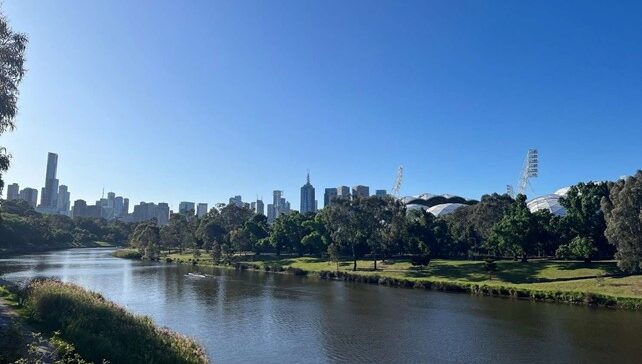
Through the Erasmus+ Internship program, I had the opportunity to spend five months working at a research institute in Melbourne, Australia. My internship took place at the Hudson Institute of Medical Research, specifically within the Ritchie Centre, which focuses on improving the health of women and children.
It was especially important to me to join a research team dedicated to women’s health, as this area remains significantly under-researched, and there’s still so much to be done. I also find the field both meaningful and highly fascinating.
During my internship, I worked in the Endometriosis Research Group. Endometriosis is a chronic condition in which tissue similar to the lining of the uterus grows outside it, leading to severe pain, heavy menstrual bleeding, and infertility. It affects at least 10% of women of reproductive age. Despite its commonness, the exact cause of endometriosis is still unknown, and treatment options are limited. These include surgical removal of lesions, hormone-suppressive drugs, and painkillers, but none of these can fully prevent the disease from progressing.
As part of the research team, I contributed to projects aimed at exploring new treatment options for women with endometriosis. I was also assigned my own project, which involved various laboratory tasks. During this time, I gained valuable experience with different lab techniques such as cell culture, RNA isolation, PCR, immunocytochemistry, flow cytometry, and Western blotting. I also had the chance to shadow researchers and students, learning more about their work.
Our lab group held weekly meetings, where I presented a data update on my project and gave a final presentation at the end of my internship. This helped me improve my ability to design and deliver a scientific presentation, and I received valuable feedback from the team.
In addition, I attended various seminars and research presentations across different disciplines at the institute, which broadened my understanding of medical research. I also had the chance to attend a conference where PhD students from the Ritchie Centre presented their work, which offered additional insights into current research in the field.
I was also writing a paper about the research I conducted for practice, so I was reading a lot of studies about endometriosis, which was great preparation for my bachelor’s thesis.
At the Ritchie Centre, there were many PhD, Honours, and internship students, which made it easy to meet people and make friends. I was lucky to live with really nice housemates, so I could build friendships outside the institute as well. Australians are very open, friendly, and polite, which makes it easy to start conversations. However, I sometimes found it a bit harder to form deeper connections. Apart from my roommates, who were Aussies, most of my close friends in Melbourne were other internationals living abroad, like me.
To get around Melbourne, I used the Myki pass, which is cheaper than using Myki money. I also bought a bike and helmet on Facebook Marketplace for $30, which made it easier to get around and reach the train station, but people are not really used to bikers so you have to be careful riding. I highly recommend going to Melbourne during the summer (October-March), as you can escape the winter in Germany, and Melbourne offers a ton of exciting events on weekends during that time.
Long story short, I would definitely recommend doing an internship abroad. I was a bit nervous at first about going on my own for such a long time, but having great roommates and making friends really helped me settle in and by the end, I didn’t want to leave. The internship was a great opportunity to learn new lab techniques and get a real sense of how researcher work. One of the most rewarding parts was working on a topic that hadn’t been studied before and trying to place it in a scientific context. The experience helped me build my skills and figure out whether this kind of work is the right fit for me.
After this internship, I can see myself in academic research, even though I also realized there are still areas where I need to improve some of my skills. If I had the chance, I would absolutely do this kind of internship again.
Tips for other Interns
Preperation
If you’re planning to travel far for your internship, I’d definitely recommend saving up some money beforehand. You only receive the Erasmus+ funding once the internship actually starts, so having some savings helps a lot with covering the costs for the flight, insurance, visa etc.
Visa application
I got a Work and Holiday visa so I could work while doing my internship in Australia. It’s pretty expensive though ($650 ~ 360€), so if you’re not planning to work alongside your internship, there are cheaper visa options out there!
Search for an Internship
If you’re looking for an internship in a research group, I’d recommend searching through PubMed and reaching out to researchers directly. I also made sure to express my interest in their work and read some of their studies beforehand to show genuine interest and make my mail more personal.
Search for an Apartment
In Australia, Facebook is still a widely used social media platform. My supervisor recommended a Facebook group where people post about available rooms and look for roommates. You have to be consistent with checking the posts, but I managed to find a room after about two weeks of searching. I’d definitely recommend moving into a shared house or apartment, it gives you nice social contacts and is usually more affordable. Living in Melbourne can be quite expensive, but if you move to a suburb, it’s cheaper and you can still reach the city center in about half an hour.
Insurance
I used the DAAD package.
Other
There are lots of Facebook groups for meeting people and making friends. I used them to go on a few road trips around Victoria, like to Phillip Island and the Great Ocean Road.
Formalities on Site
Telephone/Internet
I went with Aldi Mobile, which a lot of Australians use too. I’d recommend the 22GB plan for $25 (about 13.50€) a month, it includes unlimited calls to Germany and a data rollover.
Bankaccount
I didn’t open a bank account during my stay. Instead, I used Wise to transfer money when needed. Cash isn’t commonly used in Melbourne most people pay using their phones, but I was fine paying with my MasterCard and Visa Card most times.
Leisure Time
Going-Out Options
You can do a lot in Melbourne, especially during the summer. The city hosts great free events, such as the St Kilda Festival, where many well-known Australian artists perform. Pride is also a lot of fun, and there are beautiful candlelight concerts at Federation Square. The Melbourne Symphony Orchestra also performs free concerts at the Sidney Myer Music Bowl.
I also recommend checking out Blakstage at the Retreat Hotel in Brunswick (@blakstageofficial), where Indigenous artists perform.
Going to an AFL (Australian Football Leage) game is a great experience as well, it’s a big part of Australian culture, and tickets are quite cheap.
As for nightlife, clubs like Yah Yah’s and New Guernica are popular with locals. If you want to save some money, try arriving before 10 p.m., since many clubs offer free entry before then. Fitzroy, Brunswick, and Chapel Street are all great areas to explore for bars and clubs.
Other
A lot of Aussies told me that Melbourne doesn’t have beaches as beautiful as those in other Australian cities, but I still visited many stunning beaches in the area. My favourites were Half Moon Bay and Black Rock Beach. If you’re looking to do some shopping, I would recommend checking out Vinnies, a second-hand clothing chain that you can find everywhere in Australia (way better than Humana).