Practicing and defining openness in the Social Sciences and Humanities: are concepts, practices, policies and infrastructure (mis)aligned?

Key takeaways from an online panel discussion with Dr. Simon Dumas Primbault, Prof. Dr. Lai Ma, and Dr. Samuel Moore


Authors: Maaike Duine and Maike Neufend

Recommended citation: Duine, M. and M. Neufend (2026). "Practicing and defining openness in the Social Sciences and Humanities: are concepts, practices, policies and infrastructure (mis)aligned?" Open Research Blog Berlin. https://doi.org/10.59350/sz8gh-jm777

Within our project „Open Science Magnifiers”, we aim to develop discipline-specific indicators for several disciplines, one of which is the Social Sciences and Humanities (SSH). After initially concentrating on outputs, such as journal articles, book chapters, conference papers, blog posts, and open data, we encountered challenges due to a lack of available data sources. Therefore, we are currently interviewing SSH researchers on how they perceive and practice open research; what is important to them, at what stage in their career and why? Based on these interviews we aim to describe SSH Open Science Case Studies and shift the focus from monitoring open research outputs to monitoring open research processes. How can this be achieved?

To develop a more comprehensive understanding of the meaning of openness in SSH, and of monitoring SSH open research processes, we invited three international experts for an online panel discussion as part of our event series “Magnifying Open Science”. Before engaging with the audience, they first shared their insights and perspectives from their work and ongoing research projects.

Simon Dumas Primbault (OpenEdition, CNRS, France) introduced OpenEdition – a French public research infrastructure for open scholarly communication in the SSH. This platform comprises a wide range of open access outputs, such as books and journals, as well as blogs and events. He pointed out the broad variety of open research practices in SSH that are less visible, such as citizen science and participatory research, which should be included in the broader SSH open science framework. Simon Dumas Primbault also presented the initial results of the Project PaRéDo SHS (2024-2027), which observes sharing and reuse of research data in SSH, where there seems to be a contradiction between research data practices and research data policies. By considering criticism from the academic community and acknowledging the constructed nature of research data, the project highlights the epistemological impact of infrastructures as a nexus of tensions and a normative force.

In her presentation, Lai Ma (University College Dublin, Ireland) underscored the misalignment between open research policies and open research practices in SSH. Interviews showed that some SSH researchers perceive openness as mandated through policies and funding requirements, and not as shared practices that emerge from their own disciplinary norms. She stressed how the open research focus remains on STEM disciplines, not only in policies but also in research infrastructures and metadata standards. This causes problems for practicing openness and the idea of openness in SSH. Lai Ma additionally noted that open research practices are very diverse within SSH itself, as well as what is considered ‘data’: we should bear in mind that ‘one size does not fit all’. She concluded: Openness should not be an end itself; we always have to ask ourselves, why do we want to open research?

Samual Moore (University of Cambridge, UK) introduced the MORPHSS (Materialising Open Research Practices in HSS) project. He underlined the fact that many open research policies and concepts, such as reproducibility and preregistration, are directed towards the STEM disciplines. This also applies for the UNESCO Open Science recommendation: there is a strong focus on open research infrastructures and open research knowledge but other pillars – open dialogue with other knowledge systems, open engagement of societal actors – are more important for SSH researchers. To address this misalignment, the MORPHHS Project has identified 30 open research practices in the Arts and Humanities, and the Social Sciences. They specifically made this distinction within SSH, and also focus more on processes and underlying practices of openness. Additionally, six key forms of openness were defined: participatory openness, epistemic openness, process openness, evidentiary openness, availability of outputs, and accessible communication of research.


Screenshot presentation: MORPHSS (Materialising Open Research Practices in the Humanities and Social Sciences): Introducing the MORPHSS Project. Zenodo. https://doi.org/10.5281/zenodo.19660827

The discussion that followed the three presentations, focused on challenges of practicing openness in SSH and the misalignment of policies and practices. Samual Moore stressed that policies see openness as an end, closely tied to research outputs. The focus should be shifted towards the processes involved in sharing research results. Researchers should be incentivized for sharing their research with a special focus on experimentation. However, describing and monitoring these types of processes can be challenging as standard labels for describing SSH open practices are not helpful. He advised starting from a normative perspective and considering what openness is useful for, i.e. social cohesion and collectivity. Reflecting on openness as practiced within SSH as a flexible term should also be taken into account.

Lai Ma stated that for some researchers, openness is more than just responding to policies; they want to transfer knowledge into different communities, that is meaningful openness for them. Simon Dumas Primbault agreed that there are differences between researchers who only make things open when they are requested to do so, for example to publish Data Management Plans (DMPs), and others that are convinced about the value of open research. Samuel Moore underscored that mandating open research practices is an unhelpful way of encouraging open research. It is preferable if open research practices come from communities, because researchers can be much better convinced by their peers and discipline-specific differences can be taken into account. Simon Dumas Primbault describes OpenEdition as a product of a combination of top-down/bottom-up approaches to incentivize open research practices. It started with a bottom-up initiative but has now been institutionalized by the top-down system in France as an instrument to implement OA policies. With this, he added, risks that support staff in universities may feel alienated, could appear. Through an inhouse lab at OpenEdition research from within research infrastructures becomes an important node between infrastructure and research. Lai Ma agreed that there should be a balance between top-down and bottom-up approaches. Reforming research evaluation is also an important part of this.

The discussion continued on the importance of policy makers taking into account different discipline-specific perspectives when developing open research policies. Simon Dumas Primbault stated that policy makers need to consider the resources and infrastructures needed for applying openness, as SSH researchers do agree with openness principles. Lai Ma agreed that researchers do care about transparency and reproducibility but these practices are often difficult to operationalize in SSH. Samual Moore advised that critical reflections on policies are needed and that feedback should be gathered from SSH researchers already practicing openness. He added that more inclusion is needed, and that this is not unique within SSH, but this is also heard in STEM disciplines.

An alternative would be for researchers to write their own discipline-specific open research policies. The panelists agreed that if researchers had the resources this could be a valuable option. Even though it would be difficult to get consensus. It was concluded that reaching consensus and alignment between open research practices and policies is crucial for advancing openness in SSH.

Key takeaways:

  • Research and publishing practices and processes in the SSH differ from those in the STEM sciences, and therefore what is considered open research differs as well
  • There are different forms of openness and openness should be considered as an open, flexible term
  • Focus should not only be on open research outputs, but on open research processes as well, better yet on how you share openly as process of experimentation
  • What counts as open research practice should be developed with research communities, in line with the Open Science Monitoring Principles (OSMI)
  • In the Arts, Social Sciences and Humanities at least 30 open research practices can be identified
  • Operationalizing open research processes for monitoring purposes is challenging but useful for identifying the diversity of meanings
  • Reasons for researchers to practice openness vary greatly: this can be done out of policy and funding requirements or out of principles, values and ideas about openness
  • Danger of misaligned incentives and policies should be considered. A top-down approach to practicing open research is often unhelpful  
  • Research from within research infrastructures offer a valuable connection point between research and infrastructure

Presentations:

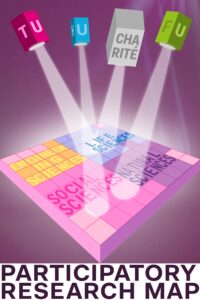
There is still time to register for the final event in our event series: Magnifying Open Science: Insights from the BUA Participatory Research Map and more. The online event will take place on Thursday April 23rd, 14-15.30H (CET). You can find additional information and the registration link here.


HTW Berlin benennt vier Ambassadors, um Open Science voranzubringen

Die Hochschule für Technik und Wirtschaft Berlin (HTW) hat Erfreuliches zu berichten: Seit kurzem sind an der HTW vier Ambassadors für Open Science benannt. Wir haben Alessandro D’Arcangeli, der die Aufgabe als Ambassador für Open Access übernimmt und in der Bibliothek der HTW beschäftigt ist, ein paar Fragen zum Engagement der HTW bezüglich Open Science gestellt.

„HTW Berlin benennt vier Ambassadors, um Open Science voranzubringen“ weiterlesen

Netzwerk Recht und Open Research im Aufbau: Email-Verteiler für Interessierte

Das neue Netzwerk „Recht und Open Research“ ist ein Vorhaben der Kompetenz- und Vernetzungsplattform open-access.network (finanziert durch das BMFTR) in Kooperation mit dem Legal Helpdesk Berlin (finanziert durch die VolkswagenStiftung). Das Netzwerk soll den Austausch und die Vernetzung zu konkreten rechtlichen Fragen genauso befördern wie zur strategischen rechtspolitischen Interessenvertretung in Sachen Open Research. Für Interessierte steht ab sofort ein moderierter Emailverteiler („recht-offen“) zur Verfügung.

Bildquelle: PxHere, Lizenz: Creative Commons Zero (CC0).

„Netzwerk Recht und Open Research im Aufbau: Email-Verteiler für Interessierte“ weiterlesen

Save the Date for Online Event Series: Magnifying Open Science

The Open Science Magnifiers project (funded by the Berlin University Alliance), aims to monitor a wide diversity of open research practices. We are collaborating with various communities in exploring and establishing different Open Science Monitoring approaches. With this event series, consisting of three online events, we would like to magnify a diverse range of Open Science practices. We invite all stakeholders to join us and discuss with us how we can best ‘Magnify Open Science’.


  • I: Magnifying Open Science: Dashboards (past event)
    • Thursday, February 26, 2026: 14-15.30 (CET)
  • II: Magnifying Open Science: Case studies and narratives (past event)
    • Thursday, March 26, 2026: 14-15.30 (CET)
  • III: Magnifying Open Science: Insights from the BUA Participatory Research Map and more
    • Thursday, April 23, 2026: 14-15.30 (CET)

„Save the Date for Online Event Series: Magnifying Open Science“ weiterlesen

Barcamp Open Science 2025: From Threats to Collective Resilience

Safeguarding research and protecting knowledge infrastructures from political, digital, and structural threats was among the topics of this year’s Barcamp Open Science in Berlin. Other sessions revolved for instance around shadow libraries, the underuse of research data management infrastructure and the question whether projects dealing with data management like EOSC and NFDI have “gentrified” the discourse on Open Science. The participants also performed interesting mind experiments and shared their Open Science success stories.

By Susann Auer, Julien Colomb, Maaike Duine, Lambert Heller, Ilona Lipp, Tilo Mathes, Daniel Nüst, Guido Scherp, Katharina B. Schmitt and Christopher Schwarzkopf

„Barcamp Open Science 2025: From Threats to Collective Resilience“ weiterlesen

Online L(a)unch of the Participatory Research Map

  • When: 2 December 2025, 12:00 a.m. – 1:15 p.m. (online)
  • Register here!

Discover the diversity of participatory research in Berlin!

We warmly invite you to the online launch of the Participatory Research (PR) Map – an interactive tool that showcases projects in which science and society collaborate.

What is the Participatory Research Map?

The PR Map features projects across various formats of participatory research, including Citizen Science, Living Labs, Patient Engagement, Collaborative Action Research, and Transdisciplinary Research. It highlights the networks within the Berlin University Alliance (BUA) and beyond – and helps foster new opportunities for collaboration and knowledge exchange.

The Participatory Research Map aims to:

  • Increase visibility and accessibility of participatory research
  • Strengthen inter- and transdisciplinary collaborations
  • Facilitate knowledge exchange between science and society
  • Inspire new partnerships for future participatory projects

What to expect at the L(a)unch:

In addition to an introduction to the development and functionality of the map, you will gain insights into concrete examples of participatory research projects within the Berlin research area. Together, we would like to discuss how this tool can support research collaboration and networking – all in a relaxed lunchtime atmosphere.

Save the date: Follow the link to register!

We’d love to hear from you! If you have any questions or feedback about the Participatory Research Map or the L(a)unch event, feel free to get in touch at: participatory-research@berlin-university-alliance.de

The Participatory Research Map is the result of cooperation between the BUA project Open Science Magnifiers and the BUA structural project TD-Lab.

Berlin University Alliance setzt Prioritäten für eine offene Wissenschaft

Die Berlin University Alliance – der Exzellenzverbund von Freier Universität Berlin, Humboldt-Universität zu Berlin, Technischer Universität Berlin und Charité – Universitätsmedizin Berlin – hat im Herbst 2023 ein Leitbild für offene Wissenschaft verabschiedet. Nun folgt ein weiteres Dokument, in dem die Umsetzung des Leitbilds näher spezifiziert wird.

Jede Einrichtung hat eigene Prioritäten für die Umsetzung offener Wissenschaft festgelegt, um den Bedürfnissen der Hochschulangehörigen gerecht zu werden. Gemeinsam priorisieren die vier Einrichtungen vier Handlungsfelder: Veröffentlichungskultur, Kompetenzentwicklung,  Forschungsdaten-Infrastruktur, und Anreize in der Forschungsbewertung.

Die Prioritäten der Berlin University Alliance bei der Umsetzung des Leitbilds für offene Wissenschaft stehen im Einklang mit der Open-Research-Strategie des Landes Berlin, die sich derzeit im Konsultationsverfahren befindet. Beide Initiativen verfolgen gemeinsame Ziele, die durch die Schaffung geeigneter wissenschaftspolitischer Rahmenbedingungen abgestimmt werden. Berlin setzt damit ein klares Zeichen für mehr Transparenz, höhere Forschungsqualität und stärkere Partizipation.

Berlin University Alliance (2025): Prioritäten der Berlin University Alliance in der Umsetzung des Leitbilds für eine Offene Wissenschaft. DOI: http://dx.doi.org/10.17169/refubium-49556
Pressemeldung der Berlin University Alliance

Short paper on the Open Science Dashboard for the Department of Earth Sciences, Freie Universität Berlin

In September 2024, the 28th International Conference on Science, Technology and Innovation Indicators was held in Berlin. The conference theme: ‘Into the great wide open?’ was explored in a wide variety of presentations, posters and panel discussions. Topics ranged from reforming research assessment, researcher mobility and policy impact to bibliodiversity, data sharing and researcher mobility, and much more. You can read more in the recently published STI conference proceedings

One of the conference’s sessions was dedicated to scoreboards and dashboards, and how these dashboards can be used for monitoring trends and developments in Open Science. It is well known that Open Science practices differ across scientific disciplines and communities and that a one-size-fits-all model does not exist. Monitoring models, such as these dashboards, should be flexible and always provide context, for example, regarding how the data used for the visualizations in the dashboard was collected.

The Open Science Dashboard for the Department of Earth Sciences, Freie Universität Berlin has been developed as part of the BUA OS Dashboards project and the BUA OS Magnifiers project. The dashboard includes metrics on the share of Open Access publications for the three different institutes within the Department of Earth Sciences, the types of Creative Commons licenses being used and the number of Persistent Identifiers utilized for identifying non-journal-article-output (e.g., books, book chapters, conference abstracts etc.). 

You can read more about the data collection and enrichment processes, the dashboard’s use within the community, and the planned dashboard metrics in our paper:

Duine, M., Iarkaeva, A., & Hübner, A. (2024, November 15). Initiating discipline-specific Open Science Monitoring with the Open Science Dashboard for Earth Sciences. 28th International Conference on Science, Technology and Innovation Indicators (STI2024), Berlin, Germany. https://doi.org/10.5281/zenodo.14170751

Das Projekt BUA Open Science Magnifiers: Weiterentwicklung des Open-Science-Monitorings in verschiedenen Disziplinen und Forschungsbereichen

Das von der Berlin University Alliance (Obj. 3) geförderte Implementierungsprojekt ist im Januar 2024 gestartet und läuft bis Oktober 2026 (English version below)

Autor*innen: Evgeny Bobrov (ORCiD), Maaike Duine (ORCiD),  Maxi Kindling (ORCiD), Anastasiia Iarkaeva (ORCiD)

Zitierhinweis: Bobrov et al. (2024) Das Projekt BUA Open Science Magnifiers: Weiterentwicklung des Open-Science-Monitorings in verschiedenen Disziplinen und Forschungsbereichen. Open Access Blog Berlin. DOI: https://doi.org/10.59350/yp5f9-wjn07

Am 1. Januar 2024 startete das BUA-Projekt Open Science Magnifiers. Dieses von der Berlin University Alliance (BUA) in Objective 3 finanzierte Projekt läuft bis Oktober 2026 und knüpft an das Projekt BUA Open Science Dashboards an, das im Dezember 2023 endete. Mit einem „Blick durch die Lupe“ wollen die Projektpartner, das Open-Research-Office Berlin (OROB), das QUEST Center for Responsible Research am Berlin Institute of Health (BIH) an der Charité – Universitätsmedizin Berlin, und die Universitätsbibliothek der Technischen Universität Berlin (TU Berlin) Open-Science-Praktiken in verschiedenen Forschungsbereichen und -communities aufzeigen und dafür verschiedene Formen der Visualisierung ausloten.

„Das Projekt BUA Open Science Magnifiers: Weiterentwicklung des Open-Science-Monitorings in verschiedenen Disziplinen und Forschungsbereichen“ weiterlesen

20 Jahre Berliner Erklärung für Open Access: Wie ist die Lage in Berlin und Brandenburg?

Nachbericht zur Podiumsdiskussion

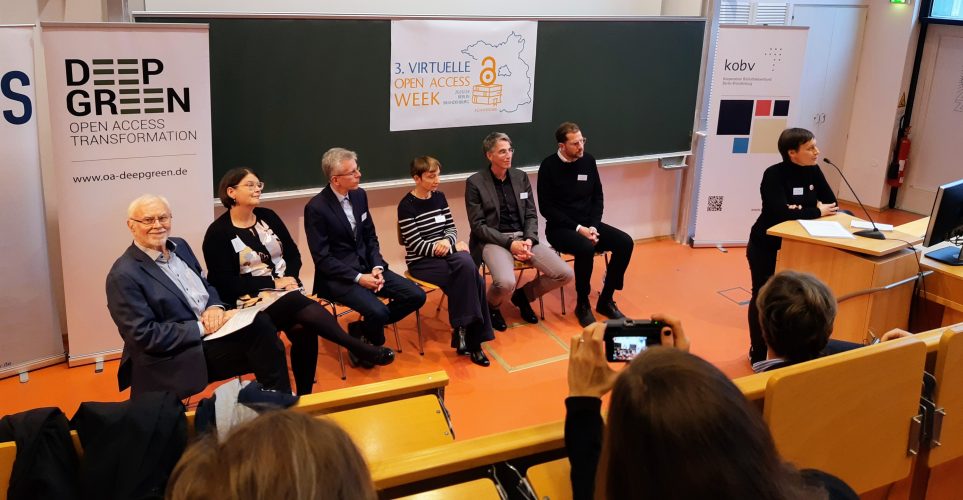
Am 24. Oktober 2023 luden das Institut für Bibliotheks- und Informationswissenschaft (IBI) der Humboldt-Universität zu Berlin (HU), der Kooperative Bibliotheksverbund Berlin-Brandenburg (KOBV), das Open-Access-Büro Berlin (OABB) und die Vernetzungs- und Kompetenzstelle Open Access Brandenburg (VuK) dazu ein, im Zuse Institut Berlin (ZIB) den Status von Open Access in der Region Berlin-Brandenburg zu diskutieren. Unter dem Motto „Was wurde erreicht und wo geht es hin?” saßen insgesamt sechs Vertreter*innen der Berliner und Brandenburger Open-Access-Community auf dem Podium.

Foto: Georg Fischer unter CC BY 4.0

„20 Jahre Berliner Erklärung für Open Access: Wie ist die Lage in Berlin und Brandenburg?“ weiterlesen